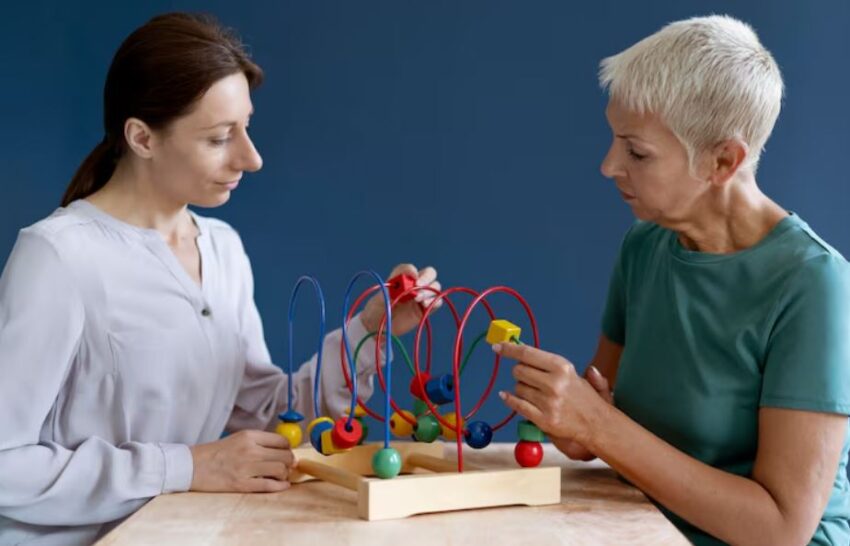
In December, you might notice something strange sitting next to the pegboards and putty in a pediatric occupational therapy clinic. A dreidel. As equipment, not as ornamentation.
It seems almost too easy to do. A four-sided spinning top, similar to those distributed at Hanukkah celebrations, was requested to serve as rehabilitation equipment, which typically costs several hundred dollars. However, therapists who use it will tell you that the motion needed to spin one well—pinching the stem between thumb and fingers, then quickly rotating the wrist—mimics some of the precise motions occupational therapists spend whole sessions attempting to extract from a hand that is recovering.
It’s called forearm supination and pronation combined with a deliberate wrist flick. Flipping a light switch, twisting open a jar, and turning a doorknob all require the same motion. That one little spin packs in grip, timing, and rotational control all at once for an adult recovering from a stroke or a child working on fine motor delays. Few toys require that precise combination without making you feel like a drill.
Additionally, a therapy putty ball cannot replicate the dreidel’s ability to provide immediate feedback. It wobbles and falls quickly when you spin it weakly. It holds, spins cleanly, and lands on a letter when you spin it with the proper amount of wrist snap. Therapists have observed that children will repeatedly attempt to achieve a clean spin, not because a chart instructs them to, but rather because the toy itself indicates whether or not they succeeded. It’s difficult to ignore how much that alters the tone of a session; repetition ceases to feel like a chore and begins to feel like a little competition with yourself.
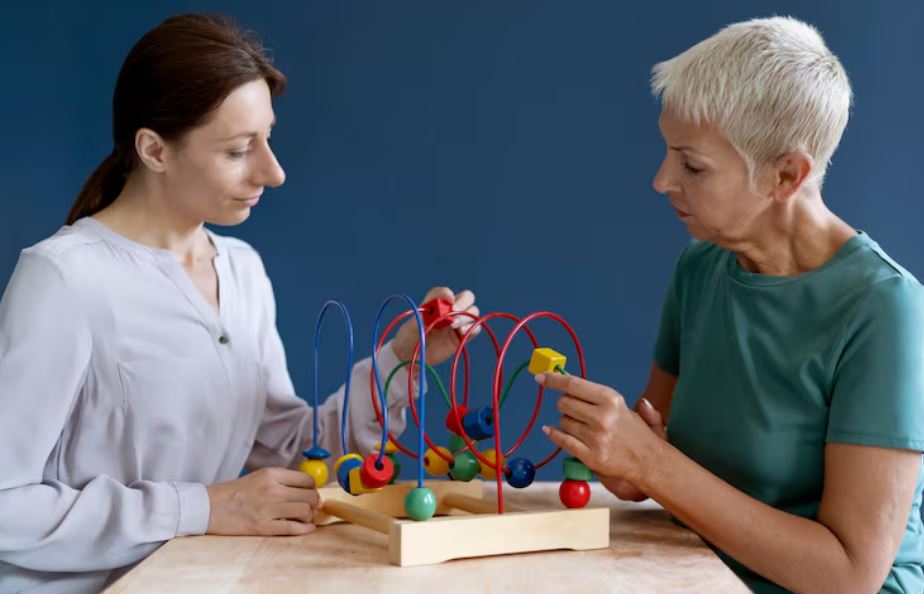
Dreidels have been used by pediatric therapists for years, frequently during the holidays, for grip strength, bilateral coordination, and even reflex work. A few have posted brief clinic videos demonstrating the use of dreidels in exercises aimed at the spinal Galant reflex, a primitive reflex that some children have not fully integrated. Admittedly, it’s a specialized use, and not all clinics employ it. However, it highlights a larger trend in occupational therapy: practitioners are continuously searching commonplace items, such as clothespins, pipe cleaners, and beads, for tools that just so happen to require the proper movement.
It is less clear whether the same reasoning applies to adult stroke recovery. The majority of published studies on recovering hand and forearm function following a stroke concentrate on techniques such as mirror therapy, which uses a mirror to fool the brain into thinking a paralyzed limb is moving normally. Mirror therapy itself has yielded conflicting results; while some trials demonstrate significant improvements in finger and wrist movement, others show no improvement at all beyond standard rehabilitation. Dreidels have not been specifically tested in any significant clinical trials. The majority of what is available is anecdotal, passed down from clinician to clinician, the kind of useful information that circulates in therapy gyms long before it is formally documented.
However, the appeal makes sense. Rehabilitation frequently encounters the same obstacle: patients grow weary of repetition, and their motivation wanes more quickly than their skills. A dreidel is inexpensive, portable, and transforms a tiresome wrist exercise into something that appears to be play for a brief period of time. Occupational therapy has never created new equipment; instead, it has always borrowed from everyday life. A spinning top from a holiday game fits that tradition almost too well — useful less because it was designed for healing, and more because somebody noticed it already moved the right way.