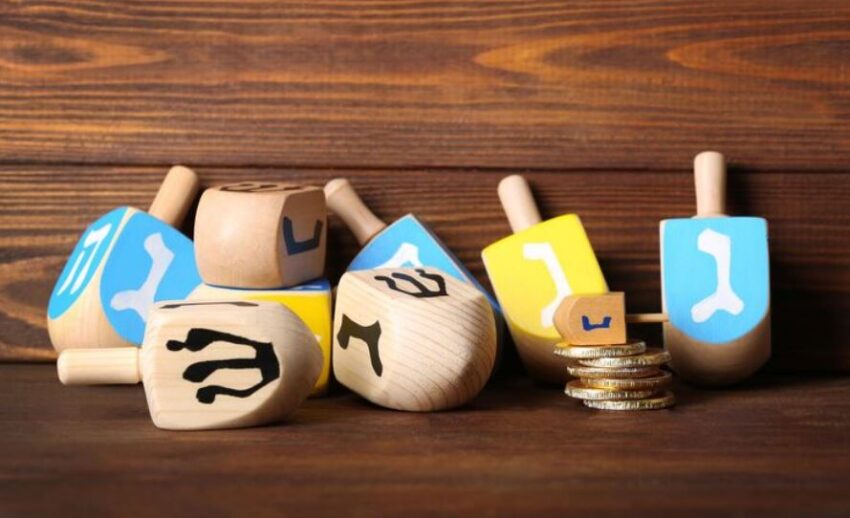
This year, there’s a minor but significant change taking place on Hanukkah tables that has nothing to do with the latkes or candles. It’s the dreidel itself. For many years, the spinning top that serves as the focal point of the most well-known game for the holiday came almost entirely from a factory mold; it was hollow, light, and designed to be forgotten by January. Dreidels carved from mahogany, walnut, or olive wood—the kind that feel heavier in the hand and look like they belong on a shelf rather than a junk drawer—are becoming more and more popular among younger Jewish families.
It’s difficult to ignore the timing. There is a feeling that the backlash was unavoidable because this generation was raised in an environment where everything was disposable. In the early 1990s, woodworkers like Marc Glickman, who used ebony, abalone shell, and brass inlay to transform dreidel-making into something more akin to fine craft, were anomalies employed in basement workshops. These days, their strategy seems less outlandish and more like a sneak peek at the future of holiday culture.
Simply put, a portion of the appeal is sensory. Thousands of plastic dreidel are never quite able to match the weight, grain, and slightly flawed spin of a wooden dreidel. People are aware of that. Before she even spins it, a grandmother holding one at a Hanukkah celebration will frequently flip it over in her palm to inspect the joinery and run a thumb along the edge. This is an instinct that was trained out of most consumer goods decades ago by mass production.
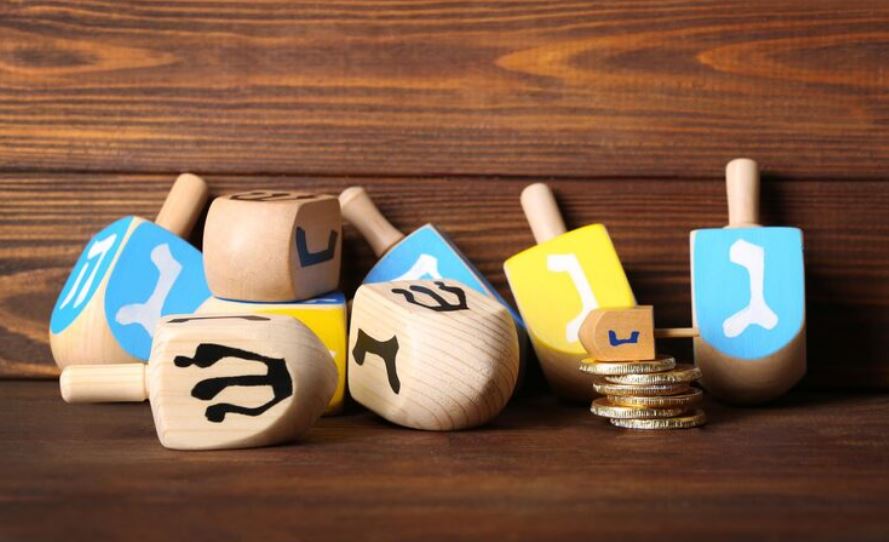
Beyond aesthetics, this also contains a generational narrative. Younger consumers, many of whom are parenting their own children, appear to be drawn more and more to products with traceable origins—that is, items made by a specific individual in a known location as opposed to being sourced anonymously abroad. Dreidels seem to be no exception to this instinct, which can be found in everything from furniture to sourdough bread. This may have less to do with Judaism in particular and more to do with a general dissatisfaction with inexpensive products that don’t last the season for which they were purchased.
A completely different approach has been used by game designers to pursue relevance. In the 2000s, entrepreneurs like Eric Pavony and Jennie Rivlin Roberts attempted to modernize dreidel by combining it with poker or transforming it into a competitive spinning sport with a mobile arena. Some of those initiatives were successful because they were clever. However, they addressed a different issue—boredom—while the wooden-dreidel movement appears to be addressing a more subdued one: the need for the item to feel valuable.
This also contains a cultural memory. Dreidel has endured centuries of turmoil, occupations, and empires, mostly supported by regular households rather than institutions. It says something about how each generation attempts to make inherited ritual feel like its own that a toy this old is now being reinterpreted by artisans rather than simply reprinted by toy companies.
It’s really unclear if this is going to be a long-term change or just a nice niche trend. Dreidels that are hand-carved are more expensive, take longer to produce, and can never outperform a plastic factory line. However, the calculation appears to be more about wanting Hanukkah to leave behind something that lasts past the eighth night than it is about economics for the families who choose them anyhow.