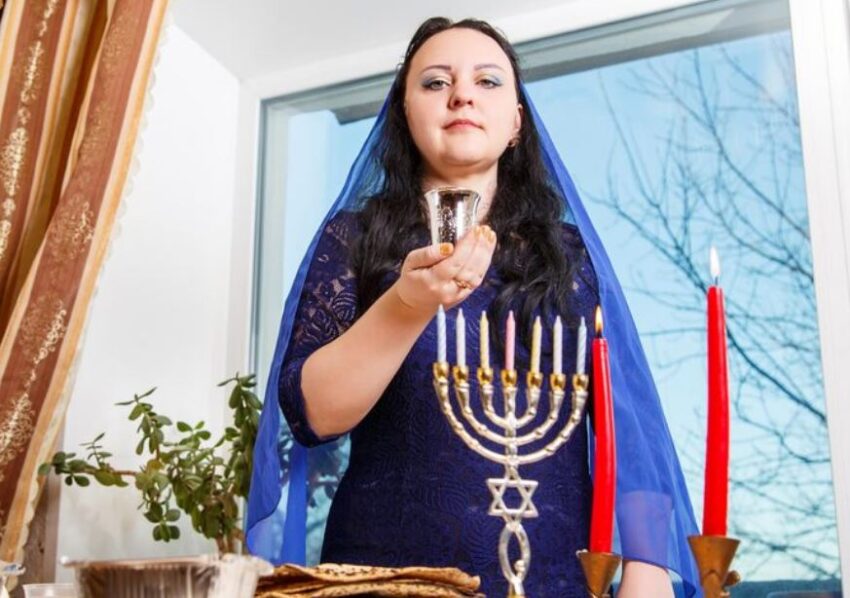
For many years, Hanukkah has primarily depicted a Hallmark deli owner falling in love with a rival deli owner over a plate of latkes. Although the formula is comfortable and effective, it is somewhat thin. Therefore, it felt more like a statement than a programming quirk when a French film festival recently debuted its first Hanukkah drama.
The movie in question doesn’t deal in gelt hunts or matchmakers. It leans toward something more substantial, such as memory, displacement, and the subtle conflict between preserving tradition and allowing it to evolve over time. That is a significant change from French cinema, which has typically treated Jewish holidays as background rather than subject, if at all.
It’s important to keep in mind that Jewish stories have long been accepted at French film festivals, though they are rarely Hanukkah-specific. Through coming-of-age stories and historical drama, which are frequently set far from Paris—on a kibbutz, in Algiers, in the years immediately following independence—directors like Alexandre Arcady have dedicated decades to examining Jewish identity. Exile and belonging were themes in those movies. In contrast, a Hanukkah drama poses a more personal, smaller question: what does this specific holiday mean to those who have inherited it but may no longer fully observe it?
American Hanukkah content tends to be humorous for a reason. Although it is a minor holiday on the Jewish calendar, its close proximity to Christmas in the United States has elevated it into something akin to a counterpart, complete with lights, gifts, and family get-togethers. There isn’t quite the same cultural pressure in France. A filmmaker is more free to ask what Hanukkah truly feels like instead of what it should look like next to a Christmas tree when there isn’t a Christmas-shaped mold to fit into.
You can tell that this wasn’t a token gesture by listening to festival programmers discuss the selection. It reads more like an admission that there are stories in French-Jewish life that are not resolved in eight minutes of candlelight and a wedding. French-Jewish life is large, diverse, and frequently understudied on screen. It feels almost overdue, like the opening of a door that has been open for years.
All of this does not imply that the romantic comedy era is over, and it most likely shouldn’t be. There is a place for lighter Hanukkah tales, which contribute to the holiday’s overall visibility in popular culture. However, a drama shifts the topic of discussion. It claims that the material is capable of supporting weight in addition to warmth. It views Hanukkah more as a lens through which to discuss family, faith, and what is passed down when no one is paying close attention than as seasonal content.
It’s still genuinely unclear whether this turns into a pattern or just an isolated incident. French festivals move in cycles, and one premiere doesn’t make a trend. But for audiences who’ve spent years watching Hanukkah flattened into eight nights of gift-wrapped predictability, this felt like permission to expect something different — a holiday allowed, finally, to be complicated on screen.