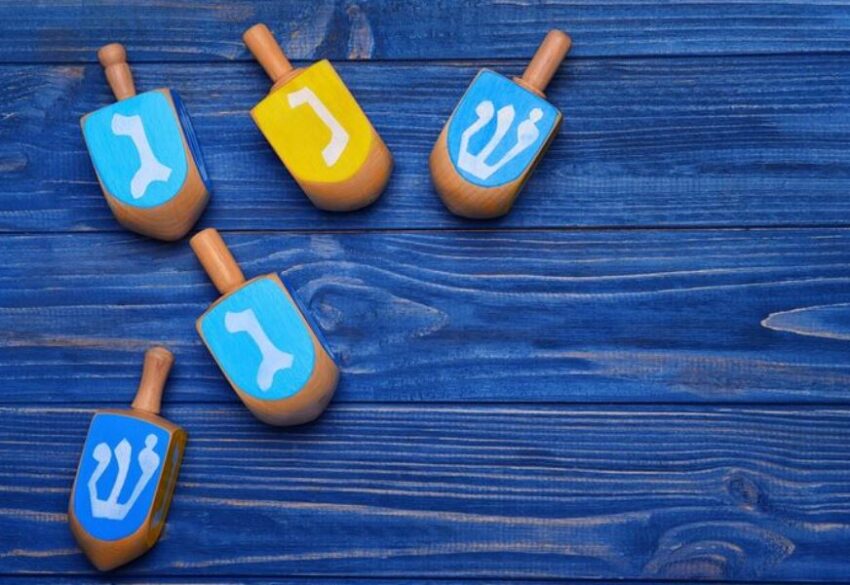
A group of soldiers crouch around a wooden crate that serves as a table on a chilly night somewhere close to the northern border. There is no official schedule and no officer making decisions. A small spinning top with only four sides, a stack of chocolate coins that someone’s mother mailed weeks ago, and an almost inappropriate level of attention for those who were inspecting equipment for a night patrol just an hour earlier.
On an Israeli army base, dreidel season is taking place, and it’s not what people outside of Israel might anticipate.
The dreidel itself is an ancient, nearly ridiculously basic object with four sides, four letters, and a game that any child can learn in five minutes. The letters nun, gimel, hei, and shin are used in most of the world to spell “a great miracle happened there.” The expression becomes “a great miracle happened here” in Israel because the shin is replaced with a pey. Although it’s a minor linguistic change, it conveys how the holiday is interpreted differently in this country. “Here” isn’t a metaphor for a soldier stationed a few kilometers away from the actual location of some of that history.
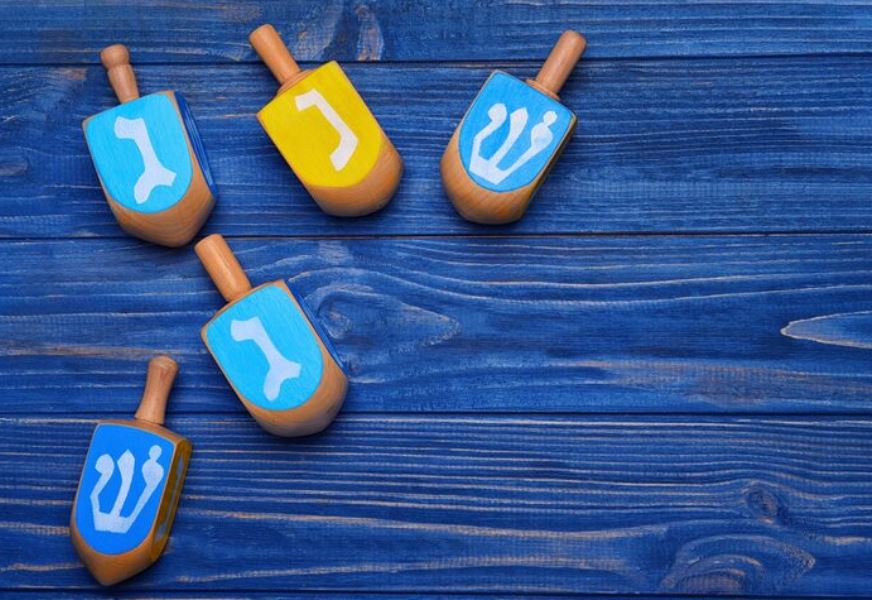
The degree to which certain units take the game seriously after Hanukkah actually arrives is less anticipated. Videos posted on the IDF’s own social media in recent years show both soldiers and civilians spinning dreidels in between shifts, treating it more like something to brag about than a kid’s hobby. When covering the military, it’s easy to overlook this kind of detail because uniforms, vehicles, and briefings are always assumed. What soldiers actually do with the long, idle hours in between assignments receives less attention, particularly during a holiday that falls in the dead of winter when deployments typically drag on regardless of the calendar.
To be honest, there’s a touching quality to it. Observing grown adults argue over whether a gimel spin is fair when the dreidel wobbles off the edge of the table, some of them barely out of their teens and some of them carrying far more responsibility than their age would suggest. Even for twenty minutes, it’s difficult to ignore how commonplace it makes everything seem. Israel is not the only country with competitive dreidel. With a “No Gelt, No Glory” motto and house rules that no one’s grandmother ever used, Major League Dreidel, which was established in New York in 2007, built an entire mock-serious tournament circuit around the game. Dreidel enthusiasts in Washington, D.C. are said to train their spin technique in the weeks leading up to competition. Therefore, in a way, what occurs on Israeli bases is consistent with a broader trend: individuals take a low-stakes children’s game and subtly increase the stakes because it provides them with something to divert their attention from their surroundings.
To be honest, there doesn’t appear to be a single official “championship” for any particular unit that has a set bracket and a trophy. The habit itself—soldiers carving out a sliver of normal life inside a job that rarely offers much of it—seems real, as seen year after year in casual photos and brief videos. It seems that the custom has endured because someone got bored enough to wager a few chocolate coins on a four-sided top at some point, and the idea just stuck.
It’s difficult to predict if it will ever develop into something more formal, like a real bracket, a real trophy, or traveling bragging rights between bases. For the time being, it continues to be what it has always been: a little, somewhat ridiculous ritual that soldiers return to year after year, primarily because it gives them a brief taste of what it’s like to simply play.