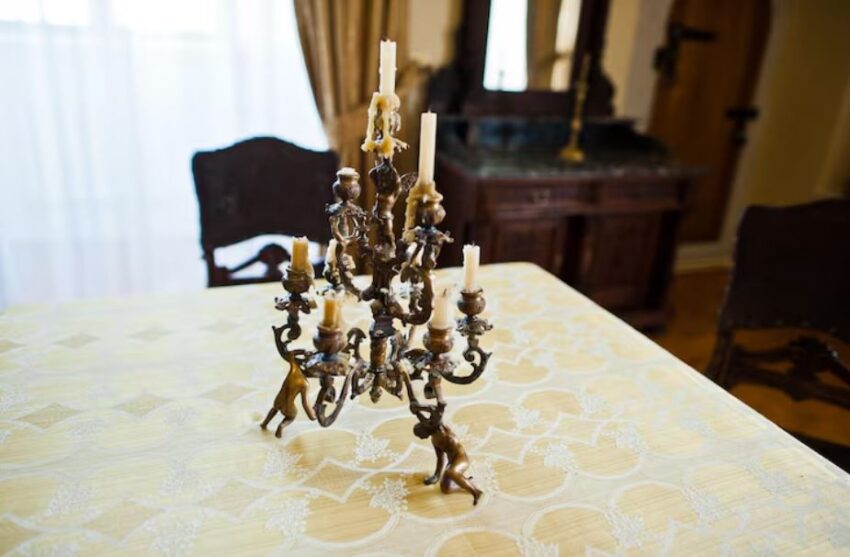
No auction house has come forward to confirm a menorah selling for exactly $2 million in London. But it’s worth sitting with the question of what it would mean if one did, because the gap between that number and reality is smaller than most people assume.
Consider the trajectory. In 2016, a 270-year-old menorah tied to the family of Dutch resistance fighter George Maduro sold in The Hague for $441,000, against an estimate of roughly $9,000 to $15,000. The auctioneers later admitted they were caught flat-footed. Bidding opened at 20,000 euros and kept climbing while staff scrambled to field phone calls they hadn’t planned for. That single sale reset what people thought a menorah could be worth. It’s not hard to imagine a rarer piece, with a deeper story attached, pushing that ceiling several times higher in a market that’s grown more comfortable spending big on Judaica.
There’s also the matter of how these sales happen now. Christie’s recent handling of the Max N. Berry menorah collection wasn’t a public auction at all — it was a private sale, what the trade calls a selling exhibition, with most pieces priced between $5,000 and $30,000 and no hammer falling in front of a room. Christie’s private sales rose 41 percent in a single year while public auction revenue fell. A Christie’s executive put it plainly: uncertain times make buyers want discretion, not a paddle in the air. A $2 million menorah moving through that kind of channel wouldn’t generate a press release. It would just appear, quietly, in someone’s collection.
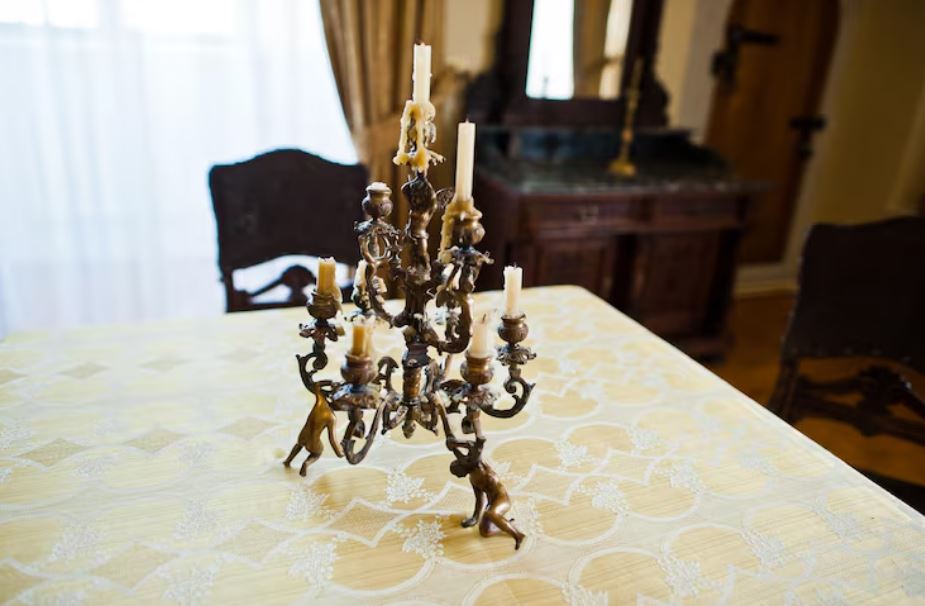
That’s the part of this scenario that feels most believable. High-value Judaica increasingly trades hands away from the gavel, between people who already know each other or are introduced through a specialist. Sotheby’s has its own Judaica department spanning London, New York, and Tel Aviv, and its biggest recent triumph — the $38 million sale of the Codex Sassoon, the oldest near-complete Hebrew Bible — shows there’s no real ceiling on what a singular piece of Jewish history can fetch once the right buyer and the right provenance line up. A menorah with a documented wartime story, or one tied to a recognizable name, sits closer to that territory than people might expect.
It helps that interest in this category isn’t coming only from collectors who grew up lighting one. Marilyn Monroe’s brass menorah, a wedding gift from Arthur Miller’s parents, sold for around $112,500 in 2019 — proof that celebrity provenance alone can multiply a price several times over. Stack rarity, wartime history, and a recognizable name onto one object, and seven figures stops sounding like a stretch.
None of this confirms that a specific menorah sold for $2 million in London last week, or that it ever will. What it does suggest is that such a sale wouldn’t be an anomaly so much as a logical next step — one more quiet transaction in a market that has already shown it will pay far more than expected, far more quietly than expected, for an object that has meant the same thing to Jewish families for centuries.