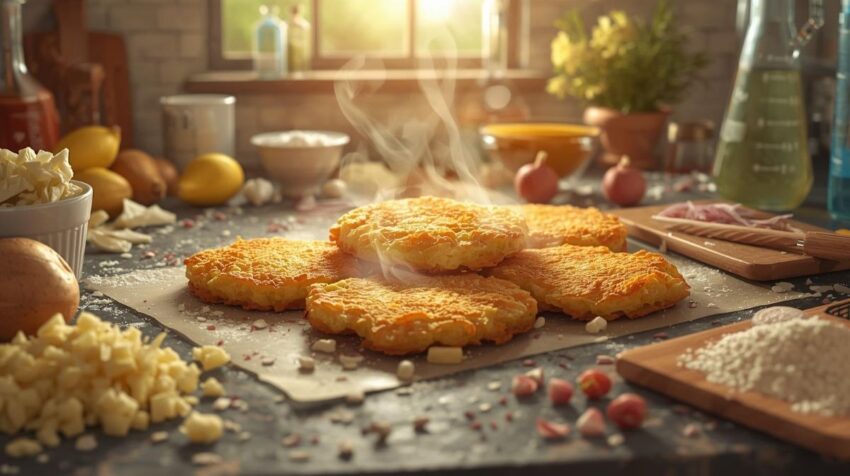
The Hanukkah Latke, the humble potato pancake, is a culinary marvel. It is a deceptively simple dish—potatoes, onions, and oil—yet its perfection lies in a delicate balance of chemical processes. Every cook aims for that ethereal quality: a brittle, golden-brown exterior that shatters on the first bite, yielding to a tender, savory interior. Anything less than transcendent crispness is considered a failure.
Achieving this “Latke Nirvana” is not about following a recipe; it’s about mastering the underlying culinary science of starch, water content, and thermal dynamics. The three pillars of Latke perfection are: starch selection, aggressive dewatering, and the physics of frying.
1. Starch Selection: The Amylose Advantage
Not all potatoes are created equal, and the success of your Latke begins with the type of starch they contain. Potatoes are composed primarily of two types of starch molecules: amylose and amylopectin.
- Amylopectin is highly branched, sticky, and holds its shape well when cooked (like a Waxy potato, such as Red Bliss or New Potato).
- Amylose is long and linear. When heated, it breaks down and swells, creating a light, fluffy texture that crumbles easily.
For Latkes, we need a potato that is naturally high in amylose and overall starch content. This means reaching exclusively for the Russet potato (or Idaho potato).
The Russet’s high starch content (around 22%) allows it to shred easily, and when cooked, the amylose structure creates the necessary surface roughness and internal texture needed for crispness. Using a waxy potato results in a gummy, dense, and disappointingly soft pancake because the amylopectin prevents the necessary structural breakdown that promotes a crisp exterior. The right potato is the foundation; it must be starchy enough to essentially create its own crunchy lattice when fried.
2. The Enemy Within: Conquering the Water Factor
The single greatest threat to Latke crispness is water. The average potato is 80% water. When a wet Latke hits hot oil, the energy is diverted from the desired browning reaction to the task of converting water into steam. This process slows the frying, steams the exterior, and results in a soggy, oil-saturated pancake.
The secret to crispness is aggressive dewatering.
The Critical Squeeze
After grating the potatoes and onions (coarsely, as fine shredding releases more sticky amylopectin), the mixture must undergo a two-step water removal process:
- Initial Strain: Place the grated mixture in a fine-mesh sieve over a bowl to collect the liquid.
- The Linen Press: Transfer the mixture to a clean, sturdy kitchen towel or cheesecloth. This step is non-negotiable. Twist the cloth as tightly as possible, applying significant pressure, until absolutely no liquid drips out. You should be left with a dry, almost crumbly mass.
Reclaiming the Binder
The liquid you strained and squeezed is not waste; it contains the magic ingredient. As the starchy liquid sits in the bowl, the water will separate and a layer of pure, white potato starch will settle at the bottom.
Discard the excess brown-tinged water, but scrape up the white starch layer and reintroduce it into the dried potato mixture. This pure, dehydrated starch acts as the only necessary binding agent, replacing the need for too much flour or egg, and ensuring the crispness is due to pure potato structure rather than a dense, bready batter.
3. The Oxidation Trap: Battling the Gray Zone
Few things ruin the visual appeal of a Latke faster than a dull, gray color. This is not due to bad potatoes, but to oxidation.
Potatoes contain polyphenol oxidase (PPO) enzymes. When the potato cells are shredded (damaged) and exposed to oxygen, these PPO enzymes react with phenolic compounds in the potato, leading to polymerization—a process that creates the dark, melanin-like pigments that result in the unappetizing gray hue.
Speed and Acid
To combat oxidation, two strategies are key:
- Work Fast: Oxidation is a time-dependent reaction. The moment the potatoes are grated, the clock starts. You must proceed immediately to the dewatering and mixing stages.
- Use Acid (The Latke Life Hack): A small squeeze of lemon juice or a splash of white vinegar into the initial shredded mix can significantly slow the PPO enzyme activity. The lower pH created by the acid effectively denatures the enzyme, preventing the darkening reaction and ensuring your Latkes stay bright and golden.
4. The Physics of Frying: Heat, Depth, and the Maillard Reaction
The final, critical phase is the application of heat. To achieve true crispness, you are relying on two thermal phenomena: steam expulsion and the Maillard reaction.
Oil Temperature and Expulsion
The oil must be maintained at a consistent, high temperature, ideally between 350°F and 375°F (175°C – 190°C).
When the cold, dry potato mixture hits the hot oil, the residual moisture flashes into steam instantly. If the oil is hot enough, this violent steam creation forces the oil away from the Latke’s surface, creating microscopic pockets and preventing excessive oil absorption. This process, known as deep-frying, results in a dry, crunchy shell. If the oil is too cool, the steam formation is slow, the oil is absorbed, and the Latke becomes greasy and soggy.
The Maillard Reaction
The golden-brown color and the savory, complex flavor of the Latke are the result of the Maillard Reaction (not caramelization, which involves only sugar).
The Maillard Reaction is a chemical cascade between amino acids (from the protein in the egg/binder) and reducing sugars (naturally present in the potato) when heated. This reaction creates hundreds of diverse flavor compounds and the characteristic deep-gold color. The temperature must be high, and the surface must be dry; excessive water prevents the surface temperature from reaching the 285°F (140°C) minimum required for the reaction to occur.
Oil Depth and Pan Discipline
While Latkes are often called “pancakes,” treating them like thin steaks is more accurate. Use a deep, heavy-bottomed skillet and ensure the oil reaches a depth of at least 1/4-inch to 1/2-inch. This oil depth maintains the temperature equilibrium when cold batter is added.
Finally, do not overcrowd the pan. Overcrowding instantly drops the oil temperature below the necessary Maillard threshold, resulting in pale, greasy Latkes.
Conclusion: The Latke Blueprint
The crispiest Latke is the result of conscious chemical control. It requires choosing high-starch Russets, aggressively dewatering to prevent steaming, fighting oxidation with speed and acid, and maintaining a high oil temperature to drive the Maillard reaction.
By honoring these scientific principles—from the first shred of potato to the final golden sizzle—you transition from a cook merely following instructions to a chemist manipulating elements, ensuring your Festival of Lights is illuminated by the perfect, shatteringly crisp Latke.