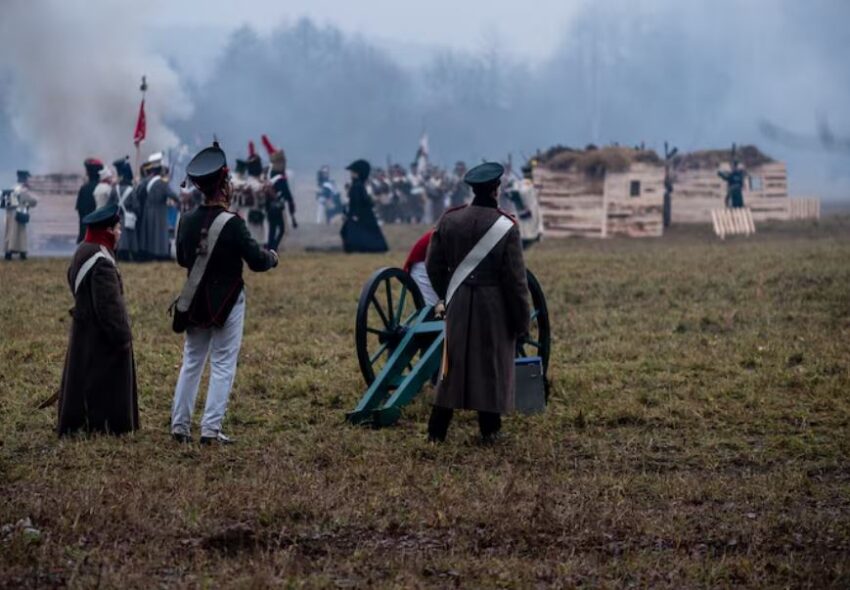
There’s something almost comical about the idea that one of history’s most consequential military campaigns helped popularize a children’s spinning top. But the story of how the dreidel found its way across the breadth of Europe owes a quiet debt to Napoleon Bonaparte — not because he had any interest in Jewish folk games, but because his wars set populations in motion on a scale the continent had never seen.
The dreidel, or dreydl in Yiddish, traces its roots to a much older European gambling toy called the teetotum — a simple spinning top with lettered sides, used in tavern games across Germany and the British Isles for centuries. Jewish communities in the German-speaking lands adapted it, replacing the Latin letters with Hebrew ones: nun, gimel, hey, and shin, forming the acronym for “a great miracle happened there.” By the late eighteenth century, the game was a staple of Ashkenazi Jewish life, particularly during Hanukkah. But it remained, for the most part, a regional practice, concentrated in the towns and ghettos of Central Europe. What changed that was, in a word, disruption — the kind only a continental war can produce.
When Napoleon’s Grande Armée marched across Europe beginning in the early 1800s, it didn’t just redraw borders. It physically relocated hundreds of thousands of people. Jewish soldiers served in Napoleon’s forces — a fact that still surprises people, given how recently many European states had granted Jews even limited civil rights. Napoleon’s own legal reforms, particularly the Napoleonic Code, extended citizenship and legal protections to Jewish populations in conquered territories. Ghettos were formally dissolved in parts of Italy and Germany. Jewish men enlisted or were conscripted into armies on both sides of the conflict, and camp followers, traders, and refugees moved with or ahead of the armies in enormous, chaotic waves.
It’s in those margins — the camp followers, the traders, the displaced families — that the dreidel likely traveled. Soldiers gambled constantly during the Napoleonic Wars. Card games, dice, and simple spinning tops were among the few entertainments available during long marches and winter quarters. The teetotum was already familiar to gentile soldiers, so a Hebrew-lettered version wasn’t exotic; it was just another gambling device. There’s a sense that the cultural walls separating Jewish and non-Jewish communities became temporarily porous during wartime, as people who would never have shared a neighborhood suddenly shared a campfire.
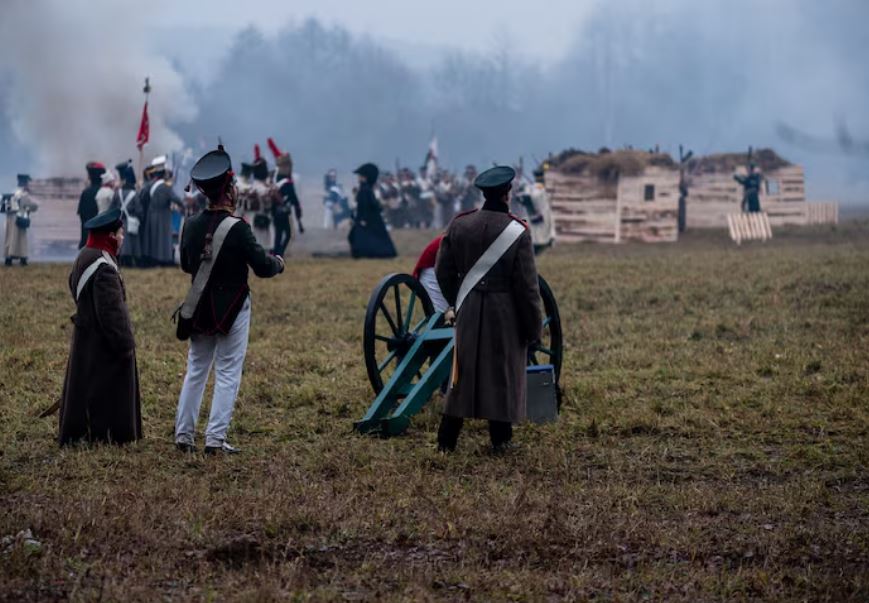
Napoleon’s dissolution of the Holy Roman Empire in 1806 and his creation of the Confederation of the Rhine threw German-speaking Europe into a kind of political blender. Communities that had been isolated for generations were suddenly part of new administrative units. Jewish families moved from smaller towns into cities. Some followed the army eastward into Poland and Russia, where the dreidel merged with existing local traditions. The Grand Duchy of Warsaw, carved from Prussian territory after the Treaty of Tilsit in 1807, became another crossroads where Ashkenazi customs circulated more freely than before.
It’s worth noting that nobody at the time would have thought to document any of this. Generals wrote about troop movements and artillery placements, not about what games children played in the wagons trailing behind the supply lines. The dreidel’s spread wasn’t recorded because it wasn’t considered important — which is precisely what makes it interesting now. Cultural diffusion rarely happens through grand proclamations. It happens through people carrying small, familiar objects into unfamiliar places.
After Napoleon’s defeat and exile, the Congress of Vienna in 1814–15 attempted to put Europe back together. Borders were restored, monarchies reinstated, and the old order patched up as best it could be. But you can’t undo the movement of people. Jewish communities that had migrated during the wars often stayed where they’d settled. The dreidel, by then, had found homes in communities from Amsterdam to Vilnius, carried not by policy but by the ordinary human habit of bringing your games with you when you move.
There’s a temptation to overstate this — to draw a clean line from Napoleon’s ambitions to a Hanukkah tradition practiced today in Brooklyn apartments and Tel Aviv living rooms. The truth is messier. The dreidel would likely have spread eventually regardless, as Jewish populations migrated throughout the nineteenth century for economic and political reasons that had nothing to do with Napoleon. But the wars accelerated the process by decades, maybe longer. They cracked open communities that had been sealed for centuries and scattered their contents across a continent.
Napoleon reshaped Europe’s legal systems, its borders, its very conception of nationhood. That a small wooden top tagged along for the ride is one of those details that makes history feel human rather than monumental. Sometimes the most durable legacies are the ones nobody planned.