At first glance, the modern movement of minimalism and the ancient winter festival of Hanukkah seem to stand on entirely different ground. Minimalism, popularized in the 21st century, is a philosophy of subtraction. It urges us to clear the clutter, resist consumerism, and focus on the absolute essentials. Hanukkah, on the other hand, is often perceived through the lens of modern holiday abundance , eight nights of gift-giving, fried foods, festive gatherings, and homes filled with decorations.
Yet, when you strip away the commercialized layers that have accumulated around the holiday over the last few decades, a fascinating truth emerges: Hanukkah is, at its historical and spiritual core, the ultimate minimalist holiday.
The story, the symbols, and the ancient laws governing Hanukkah all celebrate a profound idea that any modern minimalist would instantly recognize: the immense power of the small, the intentional, and the sufficient.
The Core Miracle: A Lesson in Essentialism
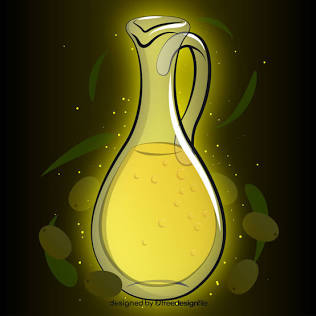
The foundational narrative of Hanukkah is famously centered on a single, tiny container of oil. According to the Talmud, when the Maccabees successfully reclaimed the Holy Temple in Jerusalem, they found it ransacked and defiled. In their effort to rededicate the space and relight the Menorah—the sacred candelabra that was meant to burn continuously—they discovered only one small jar of pure olive oil still sealed by the High Priest.
It was a meager supply, objectively insufficient. It contained only enough oil to keep the flames alive for a single day, and it would take a week-long journey to secure more.
Instead of throwing up their hands or waiting until they had an abundant supply, they chose to act with what they had. They poured the single day’s worth of oil into the lamp and lit it. The miracle, of course, is that this tiny, essential resource stretched far beyond its natural capacity, burning brightly for eight consecutive days.
This is the very essence of minimalism. It isn’t about deprivation; it’s about making space for what is pure and essential to do extraordinary things. The miracle of the oil teaches us that when we focus on high-quality, meaningful essentials—symbolized by the untainted jar of oil—what we have is suddenly more than enough.
Subtraction Over Addition
To understand why Hanukkah and minimalism are spiritually aligned, we also have to look at the history of the Maccabean Revolt itself. The conflict wasn’t just a military battle; it was a cultural clash between Jewish tradition and the prevailing Hellenistic culture.
Hellenism celebrated grandeur, excess, physical perfection, and massive monuments. It was an additive culture that valued external accumulation and societal scale. The Maccabees rebelled against this very imposition. They sought to strip away the grand, pagan additions that had corrupted their sacred spaces and return to a simpler, dedicated way of living.
In a sense, the Maccabees were executing a profound act of cultural decluttering. They chose to subtract the noise and excess of an empire to preserve the quiet, intentional essence of their faith and identity.
The Menorah as a Masterclass in Functional Design
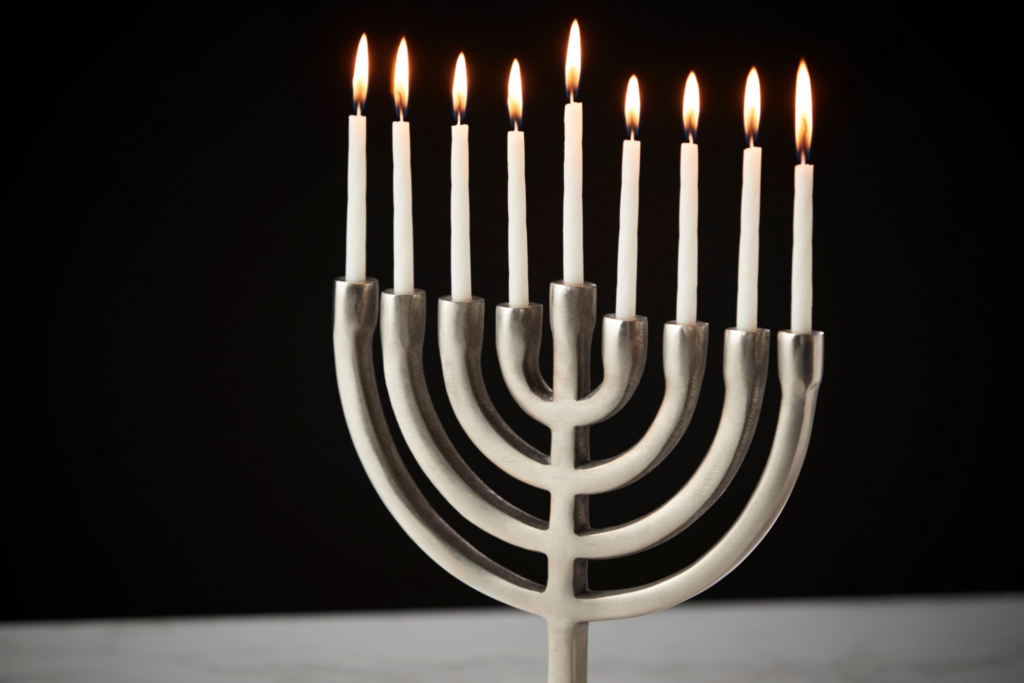
Even the physical act of lighting the Hanukkah menorah (properly called a chanukiah) reflects a beautifully minimalist design ethos.
According to Jewish law, the purpose of the flames is purely to be seen—a concept known as pirsumei nisa (publicizing the miracle). Because the lights have a dedicated, sacred purpose, ancient tradition states that you are explicitly forbidden to use them for any practical task. You cannot use the light of the menorah to read a book, knit a sweater, or guide your way through a dark room.
To solve this, the menorah features a ninth candle: the shamash, or the helper candle. The helper candle is set apart—usually higher or off to the side—and it is the only candle allowed to do the functional work of lighting the others or providing ambient illumination.
This strict separation of purpose mirrors the architectural philosophy of minimalism: form follows function. Every flame on the menorah has a singular, unambiguous reason for being there. There is no decorative waste, no accidental clutter. The design forces you to sit quietly and appreciate the light exactly as it is, without trying to multi-task or exploit it.
Shifting Focus from “More Toys” to “More Light”
In the modern era, Hanukkah has often succumbed to the pressure of the wider winter holiday season, resulting in what many call “the arms race of stuff.” The tradition of giving eight nights of material gifts is a relatively recent cultural adaptation.
When we step back and look at what Hanukkah actually asks of us, the focus isn’t on accumulation. The primary commandment of the holiday is simply to add one single flame to the menorah each night.
- On night one, we light one flame.
- On night two, we light two.
- By night eight, the room is glowing.
Notice the pattern of growth here. The holiday doesn’t demand that you start with a massive bonfire of consumption. It asks for slow, deliberate progression. It values the steady intentionality of adding a single, small spark night after night.
When embraced through a minimalist lens, Hanukkah becomes a powerful antidote to holiday burnout. It invites families to step away from the stress of packed shopping malls and overstuffed gift bags. Instead, it shifts the focus to creating memories: the smell of frying latkes (potato pancakes), the spinning of the dreidel, and the simple beauty of watching candles burn down in a quiet room. It proves that the most memorable parts of our traditions usually require the least amount of physical stuff.
The Ultimate Convergence: Finding Sufficiency in the Dark
Minimalism is ultimately a search for clarity and contentment. It’s the quiet confidence that we do not need to constantly consume or expand to find peace.
Hanukkah takes place during the darkest, coldest time of the year, when the days are at their shortest. It doesn’t fight the darkness by turning on giant, artificial stadium floods. It fights the darkness with a few tiny, flickering wicks. It declares that a small, focused point of light is completely sufficient to push back the shadows.
By pairing the timeless wisdom of Hanukkah with the mindful practices of modern minimalism, we can discover a deeper way to celebrate. We learn to value the single vial of pure oil over an endless supply of the diluted. We learn that true abundance isn’t found in what we accumulate, but in our ability to appreciate the light we already have.