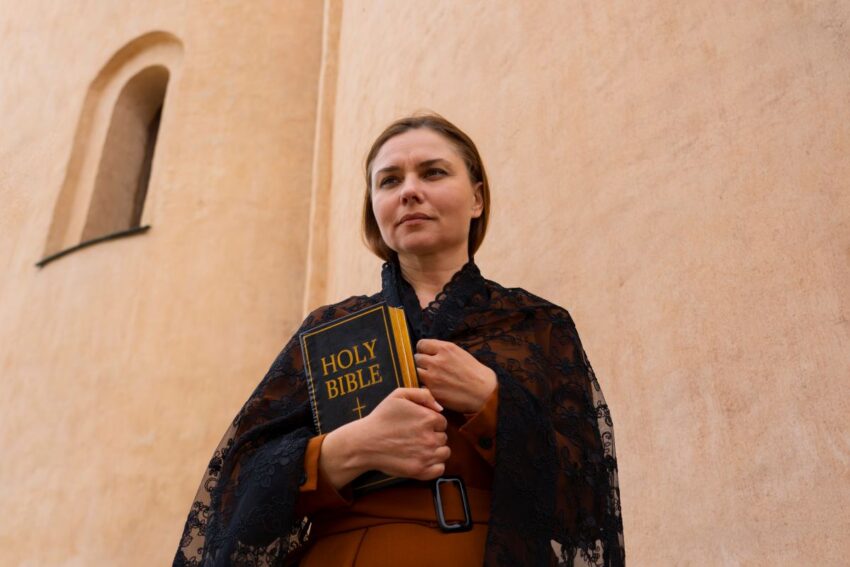
The traditional Hanukkah narrative, centered on the military victory of the Maccabees and the miracle of the oil, often highlights the male heroes of the revolt. However, a deeper look into the history, religious texts, and powerful legends surrounding the Festival of Lights reveals that Jewish women played essential, often pivotal roles in the survival and cultural continuity of the people during that tumultuous era.
Hanukkah is as much a celebration of female courage and spiritual tenacity as it is of military might.
Judith: The Original Heroine of Resistance
While not found in the primary Books of the Maccabees, the story of Judith is inextricably linked to the Hanukkah tradition and is often read and celebrated during the holiday. She stands as the ultimate symbol of spiritual and physical resistance against a tyrannical force.
The Legend of Judith
According to the Book of Judith, the Jewish town of Bethulia was besieged by the Assyrian army, led by the general Holofernes. Facing starvation and certain defeat, the town elders considered surrender. Judith, a beautiful and pious widow, devised a bold, single-handed plan to save her people.
She entered the enemy camp, using her charm and wit to gain the trust of Holofernes. On the fourth night, after Holofernes had fallen into a drunken stupor, Judith seized his own sword and beheaded him. She then carried his head back to Bethulia, where the sight of their general’s demise caused the demoralized Assyrian army to scatter, saving the town.
Judith’s Cultural Legacy
Judith is celebrated for embodying the theme of light over darkness not through warfare, but through cleverness, faith, and decisive action. Her story is believed by many to have been the inspiration for the custom of eating dairy foods on Hanukkah. According to one interpretation, Judith fed Holofernes salty cheese to make him thirsty, prompting him to drink excessive amounts of wine, thus allowing her to overpower him.
The Power of the Mother: Perpetuating Tradition
Beyond specific heroic figures, Jewish women of the Hasmonean period (when the Hanukkah events took place) were the primary guardians of Jewish identity and religious adherence at a time when Hellenistic rulers sought to extinguish it.
The Enforcement of Religious Law
The Seleucids banned essential Jewish practices, including the observance of the Sabbath, circumcision, and dietary laws. During this persecution, mothers were the ones who secretly taught their children the Hebrew language and preserved the oral traditions.
One of the most powerful—though tragic—midrashic stories linked to this time is that of Hannah and her seven sons. When ordered by the Greek king to bow to an idol, Hannah watched as each of her seven sons refused and was martyred for their faith. She encouraged their resistance and perished after them. Her unwavering spiritual strength symbolizes the ultimate sacrifice of mothers to ensure the survival of Jewish faith across generations.
The Keepers of the Light
Historically, the maintenance of the Menorah and the Temple light was primarily the role of the priests. However, the tradition of lighting candles at home—most notably the Shabbat candles—has long been a mitzvah (commandment) assigned to women. When the Temple was defiled and the Menorah extinguished, it was the faith kept alive in Jewish homes, often sustained by the diligence of women, that ensured the return to tradition was possible. This continuity of spiritual dedication is the foundation upon which the miracle rests.
Modern Hanukkah: The Women in the Kitchen and Beyond
In modern celebrations, women continue to be the essential figures who bring the miracle of the oil to life in the home.
- The Culinary Connection: Women are traditionally the ones who prepare the deep-fried, oil-laden foods—the Latkes and Sufganiyot—that are the edible commemoration of the miracle. This seemingly simple act is a critical, physical manifestation of the holiday’s central theme.
- The Narrative Carriers: Mothers, grandmothers, and female guardians are often the primary carriers of the story, teaching the blessings, organizing the games, and orchestrating the eight nights of family celebration. They ensure that the historical and spiritual light of Hanukkah is passed down to the next generation.
By remembering Judith, recognizing the self-sacrifice of women like Hannah, and honoring the daily work of mothers who preserve tradition, we gain a fuller, more truthful understanding of Hanukkah. The festival is a celebration of physical victory and spiritual resilience—a resilience that was guarded and protected by the heroic faith of Jewish women.