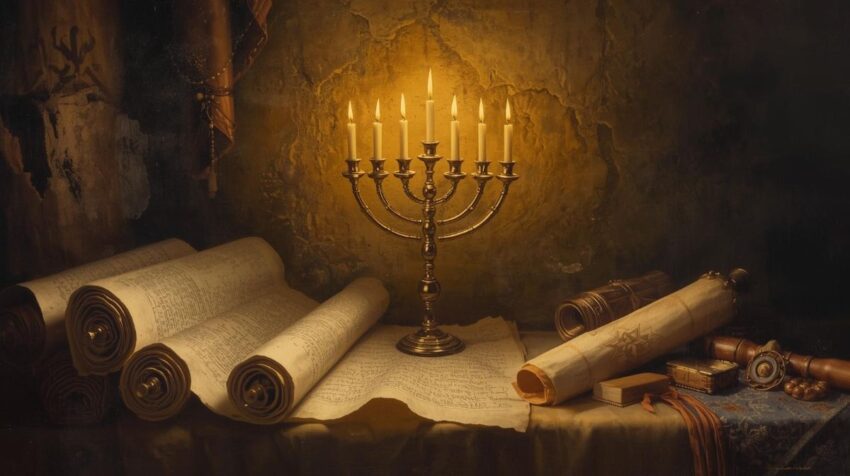
Hanukkah is a holiday centered on a miracle: a fight for freedom, a victory for faith, and a tiny, consecrated cruse of oil that burned for eight days instead of one. Yet, the Festival of Lights offers more than just a historical recap. It gives us a profound, actionable lesson on resilience—the spiritual fortitude required not just to survive periods of intense darkness, but to light our way out of them.
The historical darkness faced by the Maccabees in the 2nd century BCE was political and religious persecution. The darkness we face today is often internal: the darkness of burnout, persistent anxiety, existential dread, or the feeling of being overwhelmed by an endlessly demanding world. By examining the ritual of the menorah, we can uncover a blueprint for sustained hope.
From External Persecution to Internal Struggle
The Maccabees fought a large, organized, external enemy: the Seleucid Greeks, who sought to extinguish Jewish practice and force assimilation. The core of their resilience was the refusal to let their identity be erased. They refused to compromise their commitment to faith, even when the consequences were dire.
In modern life, the battle is often fought on internal territory. We face cultural pressures that demand we sacrifice our well-being for productivity, our silence for consensus, or our inner life for superficial validation. This is a subtle, constant form of oppression that can drain our spiritual and emotional oil supply entirely.
The Hanukkah lesson is this: Resilience is the act of fiercely protecting what is sacred—whether that is your religious identity, your mental health, your core values, or your capacity for rest. It is the revolt against the external and internal forces that seek to extinguish your inner light.
The Lesson of the Tiny Cruse: Finding ‘Enough’
The most powerful symbolic event of Hanukkah is not the abundance of oil, but the scarcity of it.
When the Maccabees rededicated the Temple, they found only one cruse of pure oil, enough for one day. The miracle wasn’t the sudden appearance of an overflowing oil tank; it was that the tiny bit they did have was enough to sustain them until the new, fresh supply could be prepared.
In modern terms, the tiny cruse of oil represents your most essential resource—your core energy, your daily dose of hope, or the single habit that keeps you anchored.
We often wait for a “miracle” moment: a large bonus, a vacation, a major life change, or a complete absence of stress before we allow ourselves to be restored. The cruse of oil teaches us the opposite: True resilience is found in acknowledging that you only have enough for today. It is the daily practice of:
- Doing the essential task rather than attempting the overwhelming one.
- Taking the five-minute break instead of waiting for a week-long vacation.
- Finding the one thing that brings light (a walk, a phone call, a good book) and focusing entirely on that, rather than despairing over everything you cannot do.
The miracle happens when you trust that your small, consecrated resource will sustain you through the darkness just long enough to see the dawn.
The Power of Incremental Light
The most instructional part of the Hanukkah ritual is the nightly increase in light. We don’t light all eight candles on the first night. We start with one, then two, then three, and so on.
This incremental practice is a direct lesson in recovering from any struggle:
- Start Small: The first light is the hardest—it’s the commitment to begin, to make the first phone call, to take the first step, or to simply get out of bed.
- Acknowledge Progress: Every night, we acknowledge the progress made the night before by adding a new light. We don’t discard the old candle; we build upon it. In life, resilience requires us to recognize and honor our small victories rather than instantly moving the goalposts.
- Light Multiplies: When you light all eight candles, the resulting glow is dramatically brighter than the sum of its parts. This reminds us that consistent, small acts of faith, dedication, and self-care compound. The collective light of our commitments creates a brilliance that darkness cannot overcome.
Hanukkah asks us to be like the Shamash, the helper candle. The Shamash is used to light every other candle, giving of itself freely without diminishing its own light. Our most enduring resilience is found in acts of Tzedakah (righteous giving), where we use our own sustained light to bring hope and warmth to the world around us.
We light up the dark not by defeating the darkness immediately, but by committing to one single, brave, enduring flame, night after night.