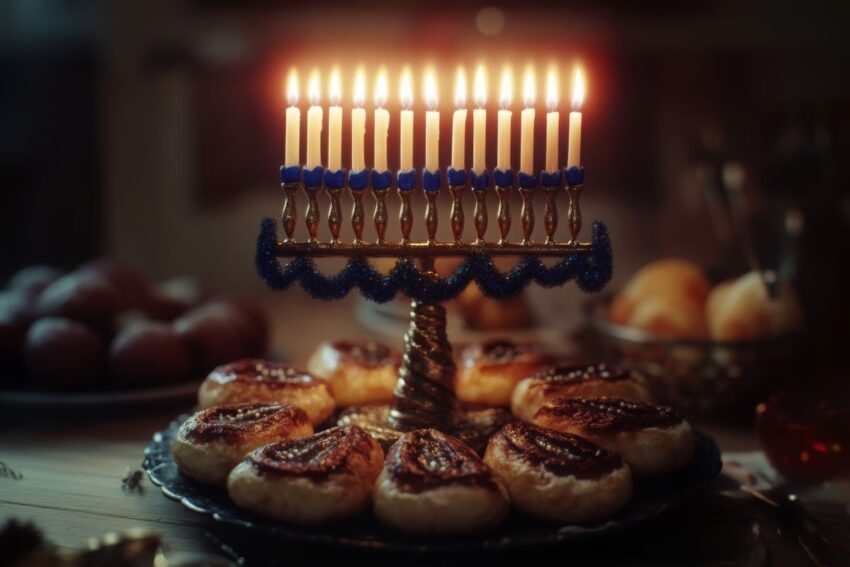
Hanukkah is the Festival of Lights, a powerful celebration of spiritual perseverance over assimilation. Yet, for many families today, the holiday also functions as the Festival of Gifts, with eight nights of presents becoming the central focus. This modern reality is a far cry from the holiday’s historical traditions, which centered on lighting the menorah and giving gelt—small amounts of money.
This shift presents a fascinating paradox: how can we balance the joy of giving material gifts with the profound spiritual mandate of Tzedakah (righteous giving) and the historical meaning of the holiday?
The Origin of Gelt: More Than Just Chocolate
The custom of giving Hanukkah Gelt (Yiddish for “money”) is the oldest form of “present-giving” associated with the holiday, and it holds deep historical significance that has nothing to do with commercialism.
1. Historical Independence
Following the Maccabean victory, the newly independent Jewish kingdom minted its own coins. Giving gelt originally served as a nod to this renewed sovereignty and the freedom to manage one’s own finances—a small celebration of political and financial autonomy.
2. Educational Reward
A more enduring tradition was the practice of distributing coins to children, often on the fourth or fifth night, as a reward for their religious studies. During the period of persecution, maintaining Jewish identity was a subversive act, and this money was a practical incentive for children to study Torah and Hebrew. It wasn’t purely an allowance; it was compensation for the hard work of preserving tradition.
3. The Shift to Chocolate
In the late 19th and early 20th centuries, when Jewish immigrants arrived in America and Europe, real coins were often replaced with chocolate coins wrapped in gold foil. This provided a symbolic, safer, and less controversial substitute for actual money, while still retaining the visual echo of the original tradition.
The Rise of Material Gifts: The December Dilemma
The modern custom of giving elaborate, wrapped material gifts over eight nights is a relatively recent phenomenon, largely a response to the cultural proximity of Christmas.
In North America and other Western countries, Hanukkah falls within the overwhelming cultural dominance of the Christmas season. To minimize the sense of cultural displacement for Jewish children and to allow them to participate in the general holiday excitement, the tradition of gelt and small symbolic gifts evolved into a cycle of eight nights of material presents, mirroring the Christmas count.
While this evolution successfully integrated the holiday into the secular calendar, it inadvertently shifted the focus from the light and the miracle to the gifts and the clutter. The emphasis often moved away from the simple act of gratitude and remembrance and toward consumer expectation.
Tzedakah: The True Meaning of Giving
The most meaningful tradition associated with Hanukkah is not gelt or gifts, but Tzedakah—the Hebrew concept of righteousness, often translated as charity. In Judaism, tzedakah is not optional benevolence; it is an obligation, a form of social justice that helps repair the world (tikkun olam).
Hanukkah, with its message of overcoming darkness, provides a powerful opportunity to focus on giving light to others through charitable acts:
- Sharing the Light: The very act of lighting the menorah reminds us that light should be shared. The Shamash (helper candle) lights the others, modeling the way we should help those less fortunate.
- A Gift of Purpose: Giving to a cause—whether it is a local food bank, a children’s hospital, or an environmental charity—connects the holiday directly to its core ethical message. It teaches children that the greatest gift they possess is the ability to help others.
Finding Balance: Integrating Gelt, Gifts, and Giving
Families today can honor all three traditions by intentionally structuring the eight nights to reflect both spiritual meaning and practical joy:
| Night | Focus | Action |
|---|---|---|
| 1 | The Miracle | A gift focused on light (e.g., a new menorah or candles). |
| 2 | Tzedakah | The family chooses a charity and makes a collective donation. |
| 3 | Gelt | Traditional chocolate coins or a small sum of real money. |
| 4 | Heritage | A gift related to Jewish culture (a book, a piece of Judaica). |
| 5 | Experience | Tickets to a show, a museum pass, or a family activity coupon. |
| 6 | Creativity | A game, art supplies, or a cooking kit for Latkes. |
| 7 | Needs | A practical, needed gift (e.g., winter clothes, school supplies). |
| 8 | The Grand Finale | A final, often larger, gift or a group gift for the whole family. |
By dedicating specific nights to Tzedakah and Gelt, and reserving material gifts for the remaining nights, families can ensure that the spiritual light of Hanukkah remains brighter than the allure of the wrapping paper. The ultimate celebration is one that uses the power of light to illuminate not only our own homes but also the needs of the wider world.