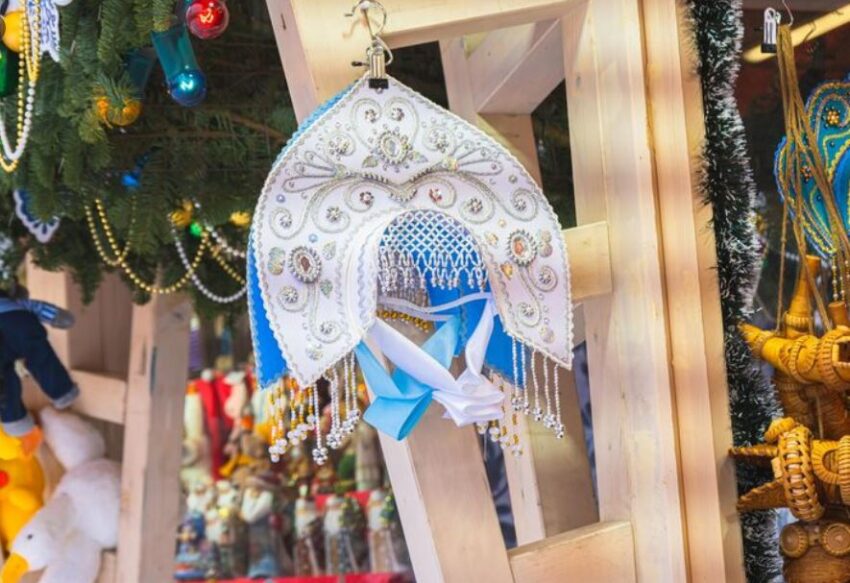
In the past, celebrating Hanukkah in the United Arab Emirates required driving into the desert, erecting a menorah on the sand, and hoping for seclusion. In the distance, camels passed. The community was tiny, cautious, and mostly undetectable. 2010 was the year. Menorahs, blue-and-silver holiday displays, and kosher gift baskets are placed next to checkout counters in some Dubai shopping corridors today with the same commercial assurance as any Christmas tree. The retail industry saw the change before most journalists did.
Naturally, the Abraham Accords marked a turning point. The normalization agreement between the United Arab Emirates and Israel, which was signed in September 2020, opened storefronts in addition to diplomatic channels. Hebrew began to appear in Dubai’s shopping centers and hotel lobbies a few weeks after the signing. In the months after the agreement, over 70,000 Israelis traveled to the United Arab Emirates, many of them during Hanukkah. That is not a point of diplomacy. Retailers in a city that relies heavily on tourism and luxury spending were quick to calculate this consumer demographic.
The speed, not the volume, is what makes Dubai’s Hanukkah retail moment intriguing. The first president of the Jewish Council of the Emirates, Ross Kriel, has explained how, in just one year, festivities transformed from intimate get-togethers in the desert to events held at five-star hotels on the Palm Jumeirah. The creator of Elli’s Kosher Kitchen, Elli Kriel, went from serving a small number of private customers to collaborating with hotels and eateries all over the nation. She has been preparing to open a fully kosher restaurant. It seems as though what began as cultural tolerance has unintentionally turned into a business opportunity that no one fully anticipated.
Compared to most Western markets, Dubai’s holiday retail already follows a different calendar. Every holiday, including Ramadan, Diwali, Christmas, and Chinese New Year, has its own window, product line, and targeted promotions. For a city that has always viewed diversity as a business model, adding Hanukkah to that rotation wasn’t a significant change. However, a sort of recalibration was necessary. For example, prior to 2020, most hotel procurement teams had not dealt with kosher certification. In some properties, it’s now commonplace. Sufganiyot recipes printed on branded cards next to gingerbread kits, dreidels next to ornaments, and other items that would have seemed out of place five years ago are now available in gift shops in tourist-heavy areas.
It’s difficult to ignore how effortlessly this has been assimilated. Sheikh Zayed Road has not seen a single eye-catching government campaign or “Hanukkah shopping festival” banner. Rather, the change has happened naturally as a result of demand from both a small but expanding resident Jewish community and visiting Israelis. Retailers reacted as they always do in Dubai: promptly, practically, and with a focus on profits. The point is in the quiet part. The commercial normalization of Hanukkah may be more important than the diplomatic kind in an area where religious identity has historically been a delicate topic. No treaty can fully replicate the acceptance of a holiday when it appears in a store window.
It’s still unclear if this momentum will continue. The Abraham Accords are still controversial among some Gulf populations, and geopolitical tensions in the wider region have not subsided. The number of Israeli tourists has changed with every news cycle. However, the infrastructure that is being developed—holiday inventory pipelines, kosher supply chains, and skilled hospitality personnel—tends to outlive news stories. The retail industry in Dubai has always been adept at predicting financial trends before the rest of the world does. At least some of that money is currently being used for eight nights of candles, fried food, and silver and blue-wrapped gifts. The days of the desert menorah seem like a long time ago.