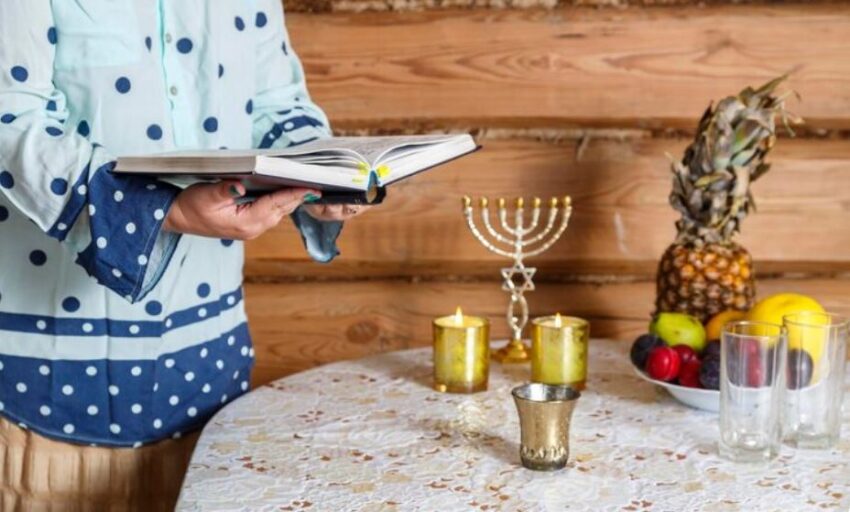
Being one of the first people on the planet to light a Hanukkah candle every year is subtly amazing. New Zealand’s Jewish community celebrates more than just the Festival of Lights because of the country’s location, which is just west of the International Date Line. They let it open. The menorah flames that flicker to life on the 25th of Kislev in Wellington or Auckland are possibly the first in the world. It may seem insignificant, but for a community of less than 10,000 people in a nation of 5.5 million, that timing has significance that statistics cannot fully convey.
Contrary to popular belief, New Zealand has a long history of Jewish ancestry. In 1843, the first congregation was established in Wellington, and five years later, in Auckland. These were not provisional meetings. Jewish settlers built synagogues in Dunedin, Christchurch, Hokitika, Timaru, Nelson, and Hastings on both islands within a generation. Many of them, businesspeople and merchants who already had business connections to Australia and Britain, were drawn to the South Island gold rush of the 1860s. In 1873, Julius Vogel became the nation’s first Jewish prime minister. It’s not a footnote. Before it was even a full generation old, that community was punching well above its weight.
The persistence of its 19th-century character is what makes New Zealand’s Hanukkah observance so fascinating. The European custom of menorah lighting as a deeply domestic, family-centered ritual was brought to North America by early Jewish settlers. This custom predated the more commercialized and publicized version of the holiday that would later emerge in North America. Due in part to the cultural significance of Christmas, Hanukkah’s popularity in the US increased dramatically during the 20th century, absorbing public menorah displays and gift-giving customs. The Jewish community in New Zealand, which was geographically remote and kept small by stringent immigration laws, did not experience the same change. Here, the celebration stayed more true to its original form: children recounted the Maccabees story without the copious amounts of wrapping paper, candles were lit at home, and prayers were said in small synagogues.
It wasn’t always voluntary to be isolated. To put it simply, New Zealand’s immigration laws during the Holocaust were heartless. The government did not consider European Jews to be refugees, and the Comptroller of Customs at the time publicly declared that non-Jewish applicants were “a more suitable type of immigrant.” Approximately 1,100 Jewish refugees were able to enter the nation. Thousands of people were rejected. Despite the tireless efforts of the Auckland Jewish Welfare Society, the bureaucratic wall remained intact. It’s an underappreciated period of New Zealand history that influenced the community’s size and character for many years to come.
With smaller pockets in Christchurch and a few other cities, Auckland and Wellington are now the two major hubs of Jewish life. The New Zealand Jewish Council is in charge of the community’s network of cultural organizations, synagogues, and Jewish elementary school. In recent years, Chabad emissaries have become more visible, planning public menorah lightings that are reminiscent of the worldwide movement started by Rebbe Menachem Schneerson in 1973. Hours before sunset had even arrived in Israel, hundreds of people gathered in New Zealand in December 2025 to light the first Hanukkah candle.
However, there is a tension that is noteworthy. A much older, more subdued custom coexists with the public menorahs and neighborhood gatherings. Even though the furniture has changed, some families still light their hanukkiyah the same way their ancestors did when they arrived from London or Eastern Europe in the 1850s and 1860s: without fanfare, without social media posts, in living rooms that haven’t really changed in character. This persistence may be more related to simple continuity than to conscious preservation. Traditions are not disturbed by the same cultural forces that alter them elsewhere when you live in a small community at the bottom of the world. Reinvention is not being pushed by a critical mass.
Additionally, the community has produced people who are truly well-known across the country. From 1929 until 1946, Michael Myers was the first Jewish Chief Justice of New Zealand. From 2008 to 2016, Jewish-born John Key served as prime minister. These are proof that a small community of a few thousand people was able to integrate itself into a nation without losing its identity; they are not symbols of acceptance. It’s difficult to ignore the fact that this is the exact equilibrium that the Hanukkah tale honors: preserving one’s identity without retreating, interacting with society without becoming a part of it.
A silent declaration is made each December when the candles are lit in Wellington and Auckland before anywhere else in the world. Not dramatic, not loud. Just remain steady. Still burning at the edge of the map, this 19th-century tradition was brought across oceans by settlers, traders, and refugees. Even though no one would publicly refer to it as such, that perseverance is a kind of miracle for a community this small.