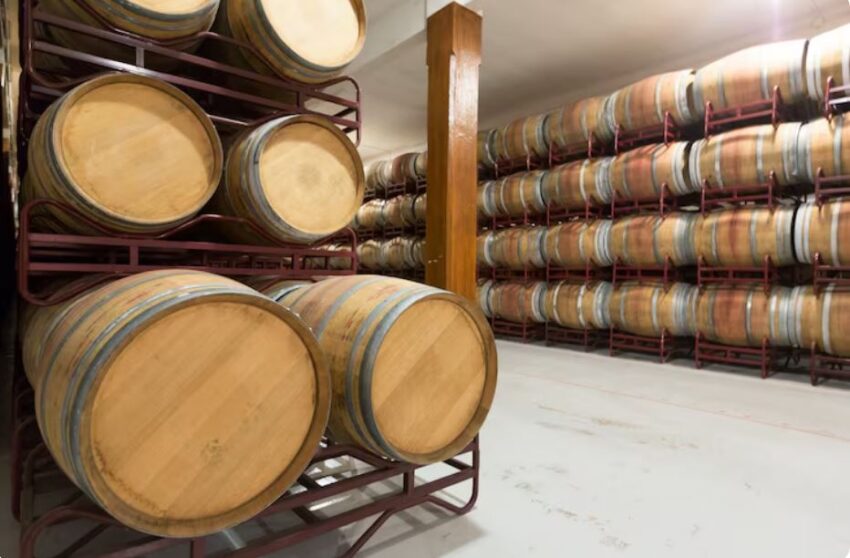
A small group of distillers spends their winters in a converted dairy barn off a county road outside Woodstock, New York, doing something that hardly anyone else in the bourbon industry bothers to try. They construct menorah-shaped barrels. Not menorahs painted on barrels or imprinted on the head in the same manner that Heaven Hill engraves its founding year on glass. Real barrels that are manually hooped, staved, and taper into nine distinct arms before the whiskey ever comes into contact with wood.
It may have begun as a gimmick, and it sounds like one. The project’s sponsor, Eight Nights Distillery, has never concealed the fact that the concept started out as a Hanukkah marketing ploy. However, it ceased to be a joke and became more akin to an obsession between the first unsuccessful prototype and the third year of barrel trials. In interviews, the soft-spoken craftsman Avi Marcus, the cooper who created the shape, stated that mastering the angles required more time than learning to distill in the first place.
The barrel’s unusual appearance does not alter the science of barrel aging. Whether the oak is shaped like a cylinder or a nine-branched candelabrum, charred oak still provides the majority of the color and about 60% of the flavor of whiskey. The distillery claims that surface area is what does change. Compared to a typical 53-gallon barrel, a menorah barrel has significantly more interior wood touching the liquid in relation to its volume, which accelerates extraction in unpredictable and difficult-to-control ways.
That might be exaggeration, the kind that every small distillery uses to tell a story. However, there is also a chemical logic to it that is difficult to completely reject. More wood contact generally means faster caramelization of sugars, quicker tannin extraction, an accelerated version of what happens in any barrel over years. According to Eight Nights, its menorah-aged bourbon takes around eighteen months to reach a four-year flavor profile. Nobody outside the company has independently verified that math, and it’s worth saying so plainly.
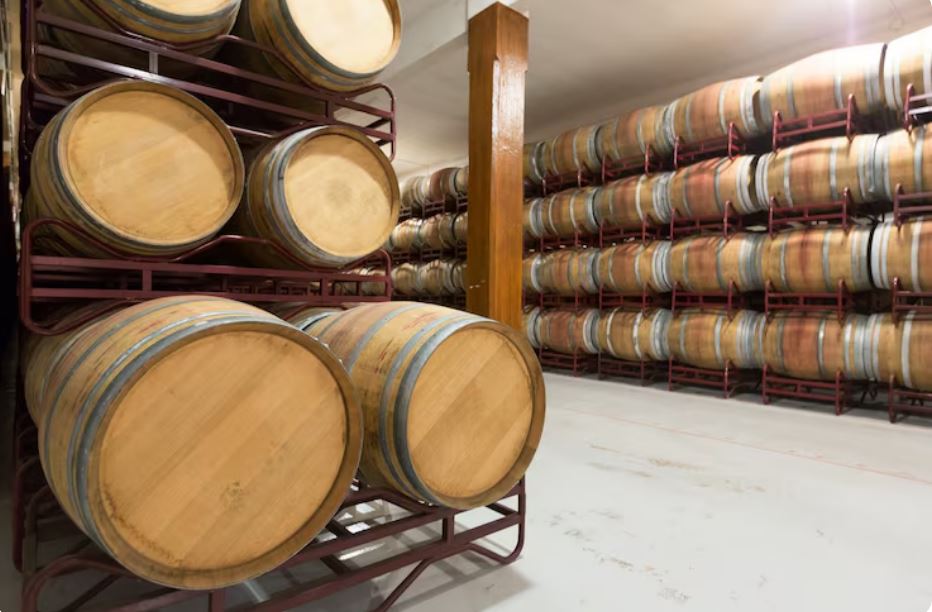
The symbolism is undeniable, and it’s the main reason this whiskey is discussed at all. The menorah tells the tale of oil that should have run out in one day but managed to last eight. There is a clear poetic appeal to aging whiskey more quickly in a container shaped like the very thing connected to that miracle. Unbeknownst to the public, distillers frequently aim for myth. Whether accurately or not, Elijah Craig is remembered as the Baptist clergyman who allegedly made the accidental discovery of charring.
Every December, as I watch the bottles disappear from the shelves, I get the impression that Eight Nights knows something that most craft brands don’t: a good story sells more quickly than a good barrel could. The whiskey itself isn’t transcendent; it’s solid. It is generally described by bourbon drinkers as warm, slightly sweet, and a little hot on the finish, which is about what you would expect from a young spirit pushed hard.
It’s still genuinely unclear if menorah-shaped barrels will become an industry curiosity or disappear into the long list of failed whiskey gimmicks. Ideas that flourished during one holiday season and vanished the next are abundant in craft distilling. But for now, in a barn that smells permanently of charred oak and pine sap, a handful of coopers keep building barrels nobody else has ever needed to build, betting that the shape of a sacred object can teach old whiskey a new trick.