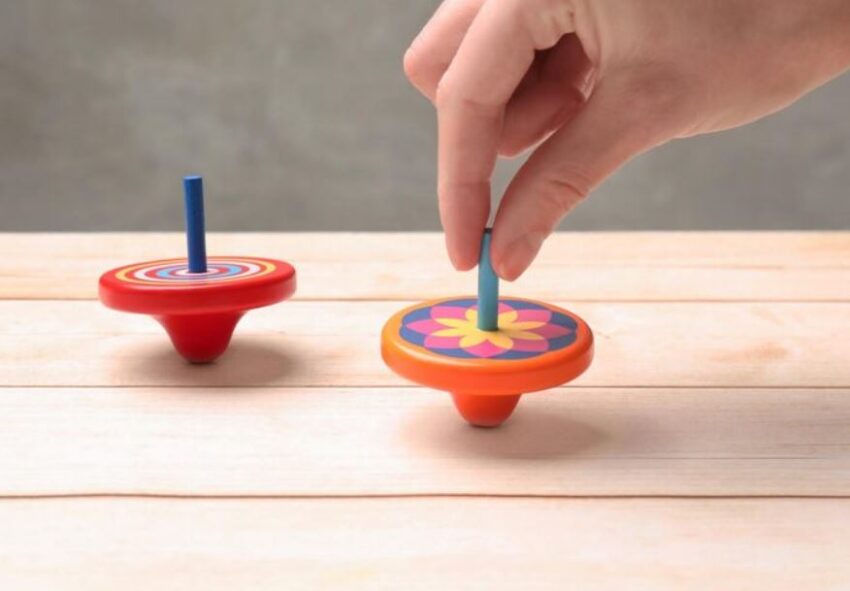
A young professional is practicing bouncing a four-sided top off a wooden table and attempting to land it upside down somewhere in a rented event space in Washington, D.C. He has been working on it for the past two weeks. If he prevails, he will receive a personalized trophy and the unofficial title of “Dreidel Champion of the City of Spin.” It sounds ridiculous. It also sounds a lot like the origins of curling.
For more than ten years, there have been sporadic, semi-serious pockets of competitive dreidel spinning. The idea that the traditional Hanukkah top could be more than a holiday novelty was first introduced by Major League Dreidel, a humorous company that once sold a product called the Spinagogue, which is essentially a miniature stadium for dreidel competition. Chabad chapters have held competitions with round-robin brackets, judges, and point systems in places like Washington, D.C. And a recurring question keeps coming up in discussions between cultural analysts and supporters of fringe sports: is dreidel spinning ever going to be an Olympic sport?
The concept isn’t as ridiculous as it seems at first, but it’s also far from reality. Sports that started out as regional hobbies or cultural oddities have long been incorporated into the Olympic program. A farmyard game from Scotland was called curling. Skateboarding was a sidewalk uprising in California. Breaking originated on cardboard mats in the Bronx and made its debut at the 2024 Summer Olympics in Paris. Competitive dreidel has at least the first component of the mix of institutional momentum and grassroots enthusiasm that has always paved the way from novelty to the Olympic ring.
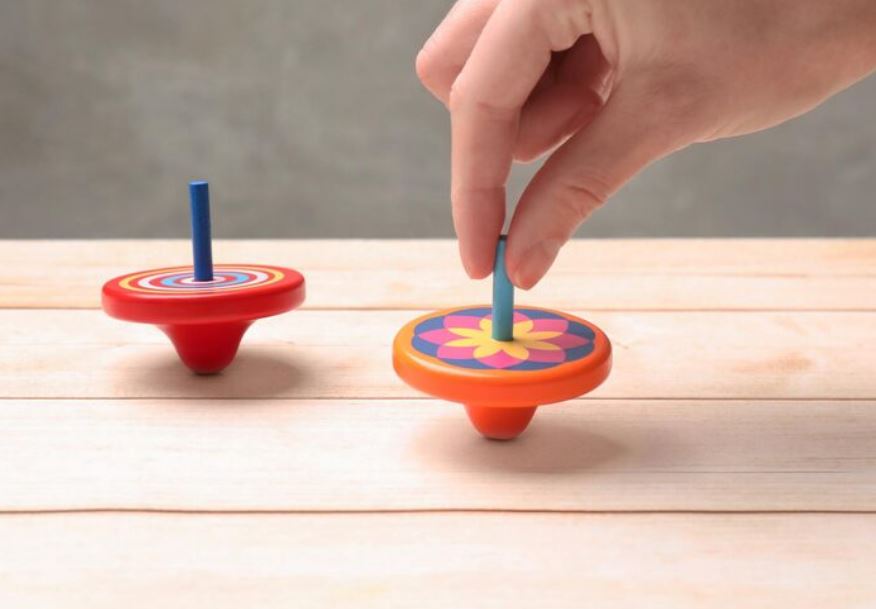
The conflict between skill and chance is what makes dreidel an intriguing competitive format. To be honest, traditional dreidel is a dull game. Whatever happens is completely random; you spin, and the top lands on one of four Hebrew letters. When Marc Tracy noted that the game basically ends the moment it starts—it’s more of a lesson in fractions than a competition—in an article published in Tablet Magazine years ago, he encapsulated the frustration. However, organizers such as Rabbi Menachem Shemtov of Chabad have been modifying the regulations to incorporate real athletic components. Spin duration is important. Technique is important. It is possible to practice, measure, and evaluate skills like controlling the dreidel’s direction across a surface, spinning it upside down, and bouncing it. It’s similar to how figure skating adds creativity to a physically demanding performance that could otherwise seem repetitive.
There’s a feeling that those advancing competitive dreidel are aware of the project’s ridiculousness and purposefully embrace it. The Spinagogue product page seems to have been created by people who are both totally in on the joke and extremely serious. At one point, Yeshiva University achieved a Guinness World Record by spinning 618 dreidels at once. Yes, these are publicity gimmicks, but they’re also creating a cultural framework around the notion that Dreidel can be a spectator event.
As it stands, the Olympic field is still more idealistic than practical. Dreidel spinning has not been formally submitted to the International Olympic Committee by any governing body. There isn’t a qualifying circuit, a standardized rulebook, or an international federation. However, supporters of fringe sports have noted that the IOC has been actively looking for events with widespread accessibility and cultural resonance—two qualities Dreidel has in spades. The cost of a four-sided top is very low. It takes only a few minutes to learn the rules. Additionally, the sport has a deeper narrative than most Olympic newcomers because of its cultural backstory, which stems from Jewish scholars using the toy as cover while studying the Torah during persecution.
It’s really unclear if competitive dreidel spinning will ever make it to an Olympic arena. The movement is still very small compared to the enormous barriers. However, it’s difficult to ignore the fact that every unlikely sport starts with people training for weeks to perfect the spin of a wooden top, debating point systems and technique, and competing fiercely in tournament brackets. A ridiculous thing is taken seriously by one person, then by another, and eventually a governing body is established, a rulebook is printed, and an Olympic committee begins to answer calls. Dreidel has not yet arrived. However, the top is rotating.