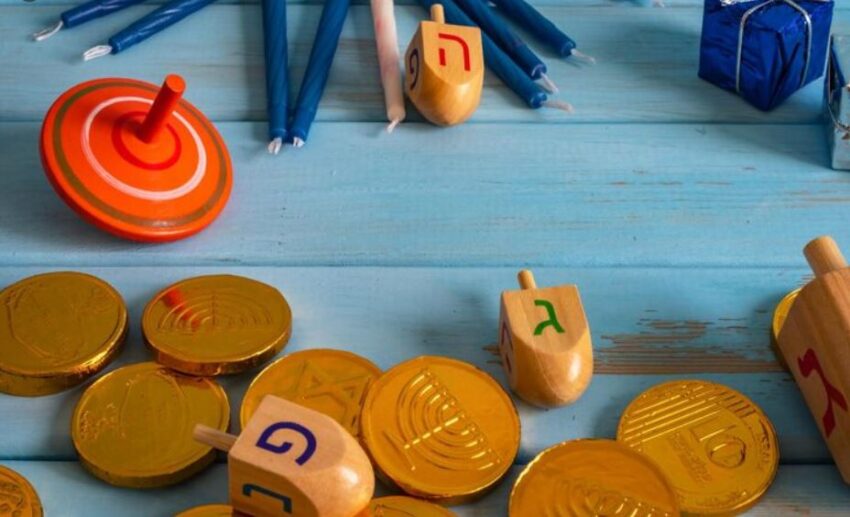
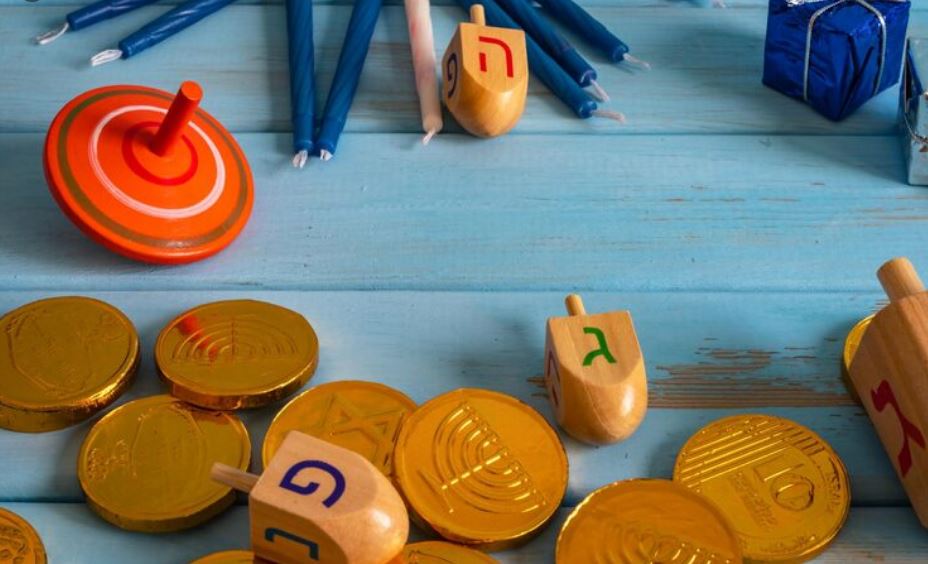
A four-sided plastic top in a suburban New Jersey kitchen essentially settles the question of December. Every year on the first night of Hanukkah, the Feld-Connolly family—she was raised Jewish, he was raised Catholic, and their two children have absorbed some of both—spins a dreidel. One contentious aspect of the holiday season will be decided by whoever lands on the letter gimel. It was the wife this year. Anticlimactically, she decided where the tree would go.
A game that determines what therapists and rabbis have spent decades referring to as the December Dilemma sounds almost too neat. However, if you speak with enough interfaith couples, a pattern will begin to show. Theology is rarely the point of contention. This year, it’s about who gets to feel honored as a child, logistics, and attention.
A similar observation has been made by religion scholar Samira Mehta, who has interviewed interfaith families for nearly a decade. The happiest households she has examined don’t have the clearest distinctions between “religious” and “cultural.” Even though the actual results—tree or no tree, latkes before or after presents—stayed mostly the same, they were the ones where everyone felt heard.
That’s the peculiar comfort of using Dreidel as a substitute for a negotiation. The stakes are low. No one is embarrassed. Instead of creating a complex hybrid custom to demonstrate the success of their marriage, the Felds simply decided that a small, absurd ritual could be the focal point of a much larger discussion, the subject of which is the focus of this December’s events.
It’s important to state clearly that not every family requires a game to get there. In October, many interfaith couples simply discuss their differences over coffee and split their evenings between menorah and tree-trimming without much drama. However, a small ritual with an inherent winner can short-circuit a fight that would otherwise have no natural conclusion for couples who are constantly circling the same unresolved argument (your grandmother always lit candles on night three, your mother always did stockings).
Here, too, there’s an almost generational phenomenon. Interfaith marriage among American Jews climbed sharply from the 1970s onward, and by the 1990s roughly half of American Jews were marrying outside the faith. Their children, now adults with kids of their own, grew up without the old assumption that a Jewish home had to be a Christmas-free home. Many of them seem more interested in figuring out logistics that don’t make anyone feel like guests in their own home than they are in establishing strict boundaries.
Whether a literal dreidel spin becomes a lasting tradition or just a one-off experiment, it points to something real: families are running out of patience for the old framing of December as a dilemma to be solved once and permanently. It’s becoming, instead, something closer to an annual negotiation—small, specific, occasionally a little funny.
Next year, the Felds intend to play once more. The husband, half-joking that the dreidel was rigged, has already stated that he is advocating for a rematch. Perhaps it was. Perhaps that’s the idea. A game gives people a reason to let go of an argument they were never going to win outright anyway, and to laugh, just slightly, on their way to a compromise.