There are boxes of paper that were never meant to be sympathetically read in the basement archives of Lisbon’s Torre do Tombo, as well as in comparable rooms in Madrid and Toledo. Most of them are trial records. Confessions and denunciations are the bureaucratic remnants of the Inquisition’s protracted campaign against converted Jews who were thought to be covertly adhering to their previous religion. For decades, historians have been going through these files, and what keeps coming up, almost by accident, are little domestic details that have nothing to do with heresy in general and everything to do with what people actually did in December behind closed shutters.
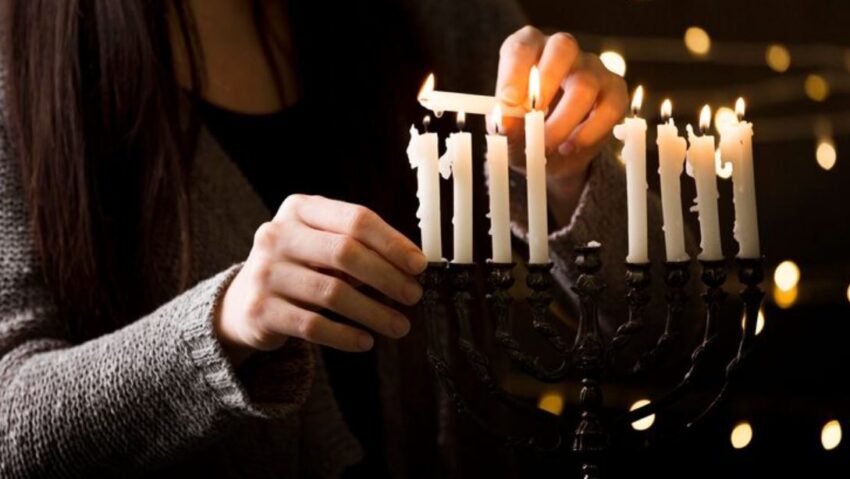
In a back room, a woman is lighting oil lamps. When neighbors became suspicious, a family claimed the flames were for a sick relative or just for light. The conversos who left this trail weren’t writing holiday guides; rather, they were attempting to avoid death, which is why these notations hardly ever use the word Hanukkah explicitly. When combined, however, the pattern is difficult to overlook. It’s the type of evidence that doesn’t immediately become apparent; it takes some time for it to begin to make sense.
When Samuel Schwarz, a Polish mining engineer, arrived in the isolated Portuguese town of Belmonte in 1917, he discovered a community that had been secretly practicing Judaism for over 400 years. They covered the windows and lit candles. Since books were too dangerous to keep, they recited the prayers their grandmothers had passed down orally rather than in writing. They had no idea their customs had a name. They just knew that you didn’t let outsiders see the light on some dark nights.
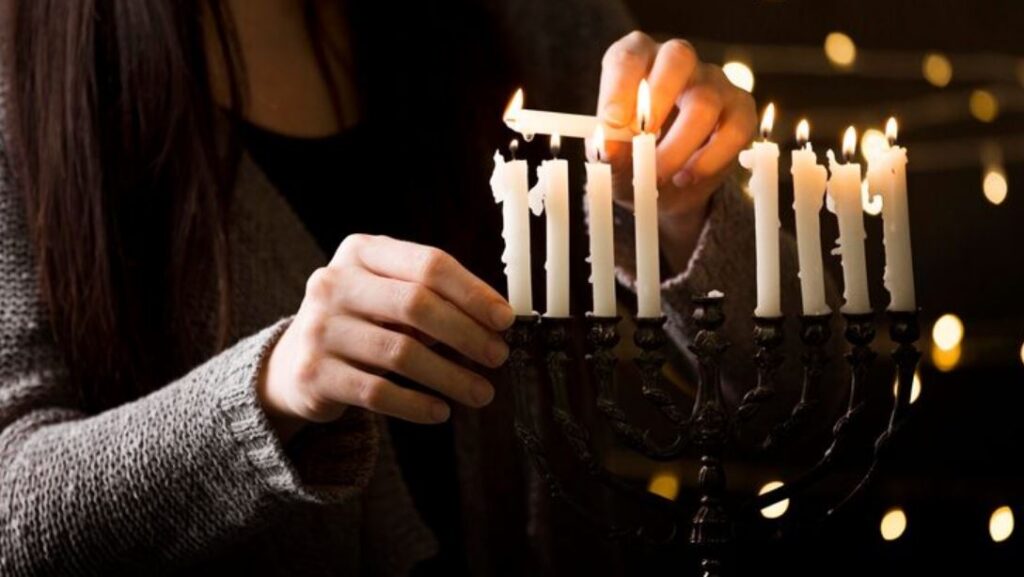
That is both genuinely touching and a little unsettling at the same time. The survival wasn’t as heroic as some later accounts would have us believe. It was low-key, spontaneous, and full of lies and compromises. Sabbath candles were concealed in clay jugs. They scheduled events to appear like regular visits. Even the ancient rabbis, who wrote centuries before all of this, framed the Hanukkah story around a small vessel of oil rather than a war, so the story itself was never really about grand battles in the way it’s often packaged today. Scaled down to fit inside a closed fist, the conversos’ version might have been closer to the original spirit than anyone had intended.
In the end, the trial records and letters don’t tell a story of victory. It is proof of a tenacious, unglamorous habit that was perpetuated under duress for generations until the threat turned into memory, which then turned into identity once more. Before researchers and rabbis helped them put the pieces back together, communities in Mallorca, some areas of New Mexico, and various parts of Portugal carried fragments of practice forward without fully understanding why.
It’s difficult to ignore how much survival occasionally depends on the unglamorous things, like a covered window, a plausible explanation, or a flame kept just low enough to go unnoticed, when looking through these archives decades after they were sealed for completely different reasons. No one wrote those letters with the intention of having them read as evidence of their faith in the future. All they were doing was trying to survive the night. As it happens, that might be Hanukkah’s most truthful record to date.