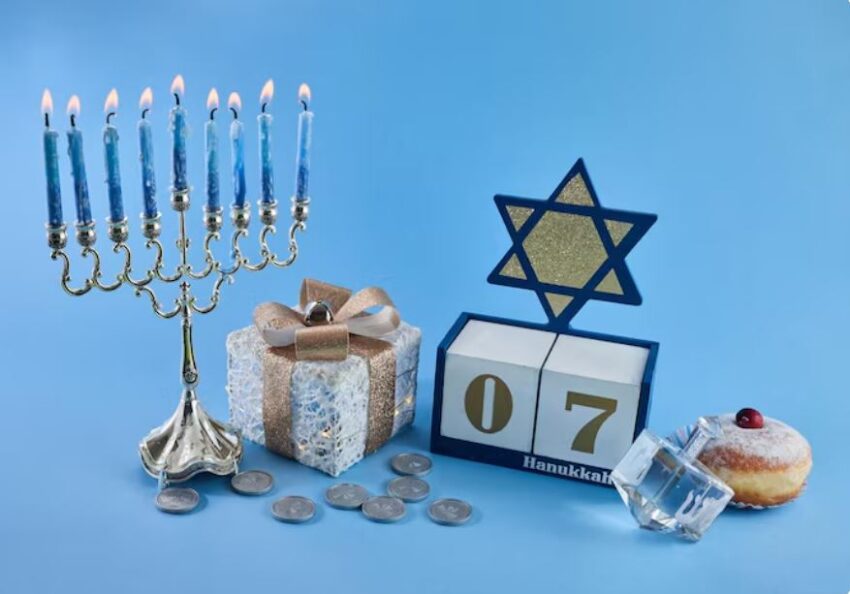
For many years, the Hanukkah section in the majority of American stores was either an accident or an afterthought. An isolated endcap by the Christmas aisle. Menorah candle boxes. Additionally, matzoh, the Passover flatbread that has nothing to do with the Festival of Lights, is almost always included in the holiday display. It seems as though someone in corporate simply Googled “Jewish stuff” and called it a day. In 2016, for example, you might have discovered Yahrzeit candles next to dreidels in a grocery store. This combination felt more like a quiet, institutional shrug than a sign of inclusion.
That image has evolved, and not in a gradual manner. Big-box retailers, most notably Target but also Walmart, Michaels, and others, have moved their Hanukkah merchandise from token endcaps into special aisles in recent years. We’re talking dreidel-shaped pet toys, menorahs shaped like corgis and whales, pajama sets with real, accurate Hebrew, and impulse-buy sections filled with bowls of Star of David and sets of applesauce versus sour cream dishes. The change has been so significant that Jewish consumers have shared videos of their hauls on Instagram and TikTok, strolling through Target with the kind of wide-eyed excitement typically associated with back-to-school sales.
For many American Jews, this story truly feels like a feel-good tale about cultural inclusion, despite the temptation to read it that way. One Austin customer recounted feeling completely overwhelmed when he entered his neighborhood Target store in early November. He was surrounded by Hanukkah merchandise that he had never seen before, items that truly represented the holiday rather than merely using its color scheme. He returned three times. The feeling of being noticed in a retail environment that has traditionally viewed Jewish holidays as insignificant footnotes to the Christmas economy has been characterized by Jewish influencers as something akin to pride.
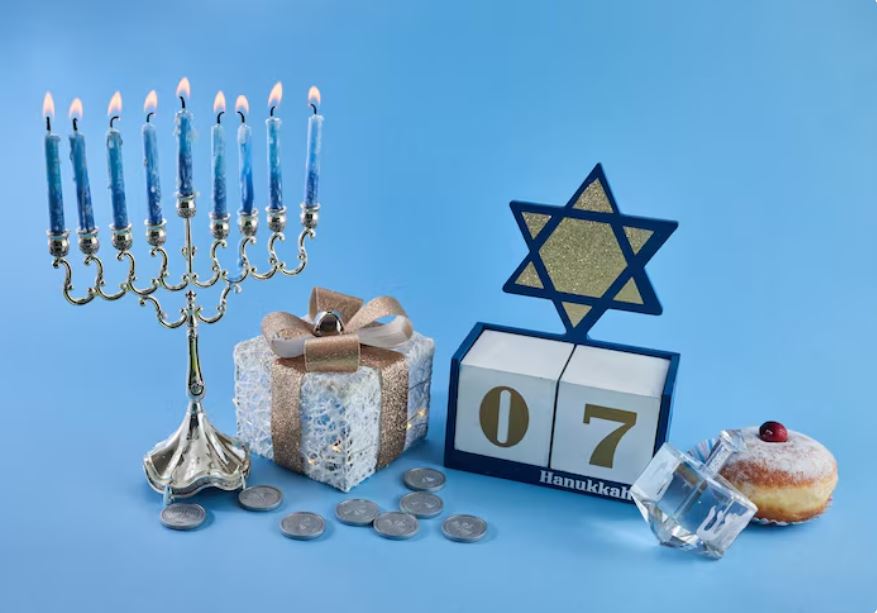
However, it is worthwhile to look at the business reasoning that lies beneath the sentimental sentiments. Out of goodwill, retailers do not set aside prime floor space during the busiest quarter of the year. Stores are too sophisticated to stock shelves with goods they don’t anticipate selling, as one NYU marketing professor put it simply. Furthermore, the figures point to a market that is significantly bigger than the approximately 2.5 percent of Americans who identify as Jewish. According to consumer surveys, up to 14% of Americans claim to celebrate Hanukkah in some capacity. This statistic is supported by interfaith families, cultural engagement, and the rising number of homes where Hanukkah falls on the same calendar as Christmas. The market as a whole is well into the hundreds of millions since more than half of those celebrants said they planned to spend more than fifty dollars on the holiday.
However, the merchandise itself is still under development. There is a gnome with a “live, laugh, latke” sign or a throw pillow that quotes the Passover Seder next to a nine-branched candelabra for each elegant menorah or clever set of pajamas. The issue with quality control hasn’t disappeared; it’s just become more subtle. The tendency to treat Hanukkah as Christmas in blue and white still exists, but fewer menorahs now have the incorrect number of branches, which is progress. One Instagram account that tracked “Hanukkah fails” discovered that the worst offenders were no longer making blatant mistakes; instead, they were simply stripping the holiday of its true significance by substituting generic inspirational slogans about spreading light for its story of revolt and rededication.
That hollowing out is a little unsettling. Hanukkah honors a bloody uprising, the victory of a small group of Jewish warriors over an empire, and the subsequent miracle. Instead of peace signs and pun mugs, the holiday is about resistance and survival. The irony has been noted by some observers: Hanukkah runs the risk of becoming precisely the kind of assimilation that the original story was opposing as it becomes more commercialized. We’re making more dreidel puns instead of the intelligent conversation that the season could inspire, as one merchandise creator put it.
Even so, it’s difficult to discount the significance of representation for those who have spent decades passing by red and green walls without ever seeing a reflection of themselves. A Hanukkah aisle at Target is more than just a marketing tactic for Jewish families living in smaller towns away from the coastal cities where Judaica stores are prevalent. It’s access. It’s a child witnessing their holiday celebrated in the same places where everyone else shops. The conflict that retailers haven’t fully resolved yet is whether that access is accompanied by sincere cultural awareness or just astute merchandising. Perhaps they don’t have to. The dreidels are finally spinning in the correct direction, the shelves are fuller than they have ever been, and a man in Austin is still attempting to fit a huge dreidel-shaped jar into his suitcase.